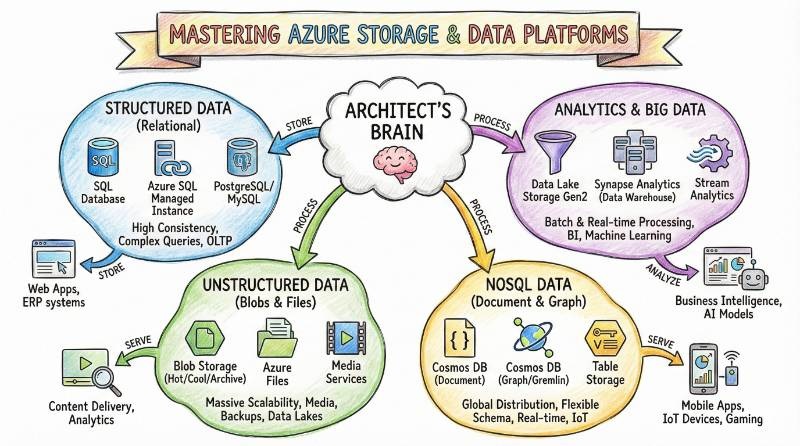
The move to the cloud is no longer a choice for modern enterprises; it is a necessity. However, simply moving workloads to the cloud isn’t enough. Organizations need systems that are resilient, secure, and cost-optimized. This is where the Azure Solutions Architect plays a pivotal role. This role isn’t just about technical implementation; it’s about strategic design that aligns with business objectives.
For software engineers and managers looking to lead in the digital era, mastering Azure architecture is a significant career milestone. This guide provides a comprehensive roadmap to navigating the Azure Solutions Architect path, designed for professionals in India and across the globe who want to transition from individual contributors to high-level system designers.
Master Certification Guide: Azure Solutions Architect
| Track | Level | Who it’s for | Prerequisites | Skills Covered | Recommended Order |
| Cloud Architecture | Expert | Senior Engineers, Architects, IT Managers | Experience in Azure Admin or Development | Design for Identity, Security, Business Continuity, and Infrastructure | After AZ-104 or AZ-204 |
Deep Dive: Azure Solutions Architect Certification
What it is
The Azure Solutions Architect certification is an expert-level credential that validates your ability to design end-to-end solutions on Microsoft Azure. It focuses on translating complex business requirements into scalable, reliable, and secure cloud designs. Unlike associate-level certifications that focus on “how” to manage services, this certification focuses on “why” specific services should be chosen to meet organizational goals.
Who should take it
This certification is tailor-made for experienced IT professionals. If you are a Senior Software Engineer, a Cloud Architect, or an Engineering Manager, this path will help you formalize your design expertise. It is ideal for those who want to be responsible for the high-level technical direction of an organization.
Skills you’ll gain
Earning this certification transforms the way you approach technology. You stop seeing services in isolation and start seeing them as building blocks for a larger strategy.
- Infrastructure Design: Master the art of choosing the right compute, storage, and networking components for any workload.
- Security & Governance: Learn to implement robust identity management and automated compliance guardrails to protect company assets.
- Business Continuity: Gain the skills to design systems that can survive major outages through high availability and disaster recovery planning.
- Cost Optimization: Become an expert at designing cloud-native solutions that maximize performance while minimizing monthly spend.
Real-world projects you should be able to do after it
An Azure Solutions Architect is expected to deliver results on complex initiatives. After completing this path, you should be able to lead projects like:
- Legacy System Modernization: Redesigning an old on-premises application into a modern, microservices-based architecture on Azure.
- Global Content Delivery: Architecting a high-speed, multi-region web application that serves millions of users with low latency.
- Hybrid Identity Integration: Seamlessly connecting on-premises Active Directory with Azure AD to provide a single, secure login for employees.
- Automated Governance Frameworks: Setting up Azure Policies and Blueprints to ensure every new resource created by your team is secure and compliant by default.
Preparation plan
Your study schedule should be based on your current familiarity with the Azure ecosystem.
- 7–14 days: For those with extensive hands-on experience. Focus on gaps in your knowledge and take multiple mock exams to understand the question formats.
- 30 days: Recommended for active Cloud Engineers. Spend one hour a day reviewing core design principles and practicing with case study scenarios.
- 60 days: The most effective path for those moving from a development or manager role. Dedicate weekends to hands-on labs and weekdays to reading official documentation and whitepapers.
Common mistakes to avoid
Many candidates struggle with this exam because they don’t pivot their mindset from “doing” to “designing.”
- Thinking like an Administrator: Don’t get bogged down in CLI commands; focus on the architectural trade-offs between different services.
- Neglecting Cost Requirements: In the Architect exam, the “right” answer is often the one that fulfills the technical requirement for the lowest cost.
- Rushing Scenarios: The exam features long case studies. If you don’t read the business constraints carefully, you will likely pick a technically valid but strategically incorrect answer.
Best Next Certification After This
After becoming an Azure Solutions Architect, the most logical progression is the Azure DevOps Engineer Expert (AZ-400). While the Architect designs the “what,” the DevOps expert builds the “how” through automation and CI/CD pipelines. This combination makes you a highly sought-after leader in any engineering organization.
Choose Your Path: 6 Specialized Learning Paths
Modern cloud architecture is vast. Once you have your foundation, you can specialize in these high-demand tracks:
1. DevOps
Focus on the intersection of design and delivery. You will design architectures that are fully automated, using Infrastructure as Code (IaC) to ensure deployments are consistent and fast.
2. DevSecOps
Integrate security into the design phase. You will specialize in creating “Security by Design” architectures where compliance and vulnerability scanning are built into the cloud fabric.
3. SRE (Site Reliability Engineering)
Design for maximum uptime. This path is for those who want to build observability into their architecture, ensuring that systems are self-healing and highly resilient to failure.
4. AIOps / MLOps
Architect for the future of intelligence. You will design the high-performance computing clusters and data pipelines required to run AI models at scale without breaking the bank.
5. DataOps
Master the data lifecycle. This path focuses on designing data lakes and real-time processing systems that allow businesses to get insights from their data instantly.
6. FinOps
Take control of cloud economics. You will specialize in designing architectures that are inherently cost-efficient, using tagging, auto-scaling, and reserved capacity to optimize every dollar spent.
Role → Recommended Certifications Mapping
| Role | Recommended Path |
| DevOps Engineer | AZ-104 (Admin) → AZ-400 (DevOps) → Azure Solutions Architect |
| SRE | AZ-104 (Admin) → Azure Solutions Architect → AZ-700 (Networking) |
| Platform Engineer | Azure Solutions Architect → Kubernetes (CKA) → AZ-400 (DevOps) |
| Cloud Engineer | AZ-104 (Admin) → Azure Solutions Architect → AZ-500 (Security) |
| Security Engineer | AZ-500 (Security) → Azure Solutions Architect → SC-100 (Cybersecurity) |
| Data Engineer | DP-203 (Data Eng) → Azure Solutions Architect → DP-300 (Admin) |
| FinOps Practitioner | AZ-900 (Fundamentals) → Azure Solutions Architect → FinOps Certified Practitioner |
| Engineering Manager | AZ-900 (Fundamentals) → Azure Solutions Architect → PMP / Agile Leadership |
Next Certifications to Take
Based on data from GurukulGalaxy, here are three ways to move forward:
- Same Track: Azure Advanced Networking (AZ-700) – For deep-diving into enterprise connectivity.
- Cross-Track: Azure Security Engineer (AZ-500) – To ensure your designs are impenetrable.
- Leadership: AWS Solutions Architect Professional – To become a multi-cloud strategist capable of leading global teams.
Top Training Institutions for Azure Solutions Architect
- DevOpsSchool: A premier institution for those who value hands-on learning. They provide comprehensive programs led by industry veterans that focus on real-world architecture scenarios.
- Cotocus: Specializes in rapid skill acquisition for working professionals. Their training is highly practical and aimed at getting you ready for high-level architectural roles.
- Scmgalaxy: Offers an extensive library of resources and community-driven learning paths for cloud engineers and architects.
- BestDevOps: Known for their focused training modules that align architectural principles with the latest industry standards and best practices.
- devsecopsschool: The leading choice for those who want to specialize in the security aspects of cloud architecture.
- sreschool: Focuses on the reliability and observability side of the cloud, perfect for aspiring SRE leads.
- aiopsschool: Provides the technical depth needed to architect modern AI and Machine Learning platforms on Azure.
- dataopsschool: Best for architects who want to master the complexities of modern data platform design.
- finopsschool: A unique provider focusing on the financial and governance side of cloud architecture.
Frequently Asked Questions (FAQs) on Azure Solutions Architect
1. How difficult is the Azure Solutions Architect certification exam? It is widely considered one of the most challenging exams in the Microsoft portfolio. Unlike associate-level exams that test your knowledge of how to configure services, this expert-level exam tests your ability to make high-level design decisions. You are often presented with complex business scenarios where multiple answers are technically “correct,” but only one fits the specific budget, security, or performance constraints provided.
2. How much time does it take to prepare for the certification? For a professional already working with Azure daily, 40 to 60 hours of focused study is usually sufficient. If you are new to the architectural side of the cloud, you should plan for 2 to 3 months of consistent preparation. This time should be split between reading official documentation, watching deep-dive architectural videos, and performing hands-on labs to see how services interact.
3. What are the formal prerequisites for becoming an Azure Solutions Architect? While Microsoft has simplified the path, the most common route is to first earn the Azure Administrator Associate (AZ-104) certification. Having a solid foundation in how to manage and monitor Azure resources is essential before you can effectively design them. You should also have a broad understanding of IT operations, including networking, virtualization, and identity management.
4. In what sequence should I take the exams? The recommended sequence is to start with the AZ-104 (Administrator) to learn the “how-to” of the platform. Once you are comfortable managing the environment, move to the AZ-305 (Infrastructure Design). This sequence ensures you have the practical experience needed to understand the theoretical design patterns tested in the architect exam.
5. Is there actual value in getting this certification if I already have experience? Yes. Experience is vital, but the certification forces you to learn parts of the Azure platform you might not use in your daily job, such as specific high-availability configurations or niche data services. It acts as a standardized “seal of approval” that proves to employers and clients that your knowledge is broad, current, and meets Microsoft’s expert standards.
6. What are the primary career outcomes after earning this credential? This certification is a door-opener for senior roles. Common job titles include Cloud Architect, Lead Systems Engineer, Solutions Architect, and Technical Lead. It moves you away from “ticket-based” work and into “project-based” leadership, where you are responsible for the technical roadmap and successful delivery of cloud transformations.
7. Does this certification require deep programming or coding skills? You do not need to be a full-stack developer. However, you must be comfortable with “Infrastructure as Code.” This means understanding JSON or Bicep for deployment templates and being able to read basic scripts in PowerShell or the Azure CLI. A basic understanding of how applications are structured is also necessary to design the infrastructure they run on.
8. How does the market value this certification in India and globally? The demand is exceptionally high. In India’s growing tech hubs and across global markets, companies are migrating legacy systems to Azure at a rapid pace. Certified architects are often the highest-paid professionals in cloud departments because they possess the rare ability to align technical designs with expensive business goals.
9. Can I skip the Associate levels and go straight to the Expert Architect level? Technically, you can take the AZ-305 exam at any time, but you will not be awarded the “Expert” title until you have also passed the AZ-104. From a learning perspective, skipping the basics is risky; most candidates who fail the architect exam do so because they lack the foundational knowledge covered in the administrator level.
10. How long is the certification valid, and how do I renew it? Microsoft certifications are valid for one year. To keep your “Expert” status, you must complete a free online renewal assessment on the Microsoft Learn platform every year. This ensures that you stay up to date with the constant stream of new features and services Microsoft adds to Azure.
11. Will this certification help me if I want to move into Engineering Management? Absolutely. Managers are often required to make budgetary and strategic decisions about the cloud. Holding this certification proves you have the technical depth to understand your engineers’ challenges and the strategic mindset to communicate effectively with executive leadership about cloud investments.
12. Is the exam more focused on theory or hands-on practice? It is a mix, but it leans heavily toward practical application. You will face “Case Studies” that describe a fictional company’s current environment and their goals. You must then choose the best architecture to help them reach those goals. Without hands-on experience in the Azure portal, these scenarios can be very difficult to navigate correctly.
FAQs on Azure Solutions Architect
1. How difficult is the Azure Solutions Architect certification? It is considered one of the most challenging certifications in the Azure portfolio because it tests design logic rather than just service knowledge.
2. Do I need to be a programmer to pass? No, but you should be comfortable with automation concepts, JSON for ARM templates, and basic scripting.
3. What is the value of this certification for a manager? It gives you the technical authority to lead your engineering teams and validate that their architectural choices align with the company’s long-term goals.
4. How much study time is required? For most working professionals, 40-60 hours of focused study over 1-2 months is the average time needed to feel confident.
5. Can I take this certification if I don’t have a degree? Yes. In the cloud industry, certifications and hands-on skills are often valued as much as, or more than, formal degrees.
6. Does the exam include labs? Microsoft frequently updates their exams. While some versions include live labs, others focus on complex case studies and multiple-choice design scenarios.
7. Is there a prerequisite exam? While Microsoft doesn’t strictly require AZ-104 (Administrator) anymore, it is highly recommended to have that knowledge before attempting the Architect level.
8. How does this certification help with salary growth? Architects are consistently among the highest-paid professionals in the tech industry due to their ability to influence large-scale business outcomes.
Conclusion
Earning your Azure Solutions Architect certification is about more than just adding a line to your resume; it is about changing how you think about technology. As organizations continue to migrate their most critical workloads to the cloud, the need for individuals who can design these systems with precision and foresight has never been greater. By following this guide and putting in the necessary hands-on practice, you are positioning yourself at the forefront of the digital transformation. You are moving beyond the role of a builder and becoming the visionary who determines what should be built and why. The path is demanding, but the opportunity to lead at the highest levels of the tech industry makes it an investment that will pay dividends for years to come.
