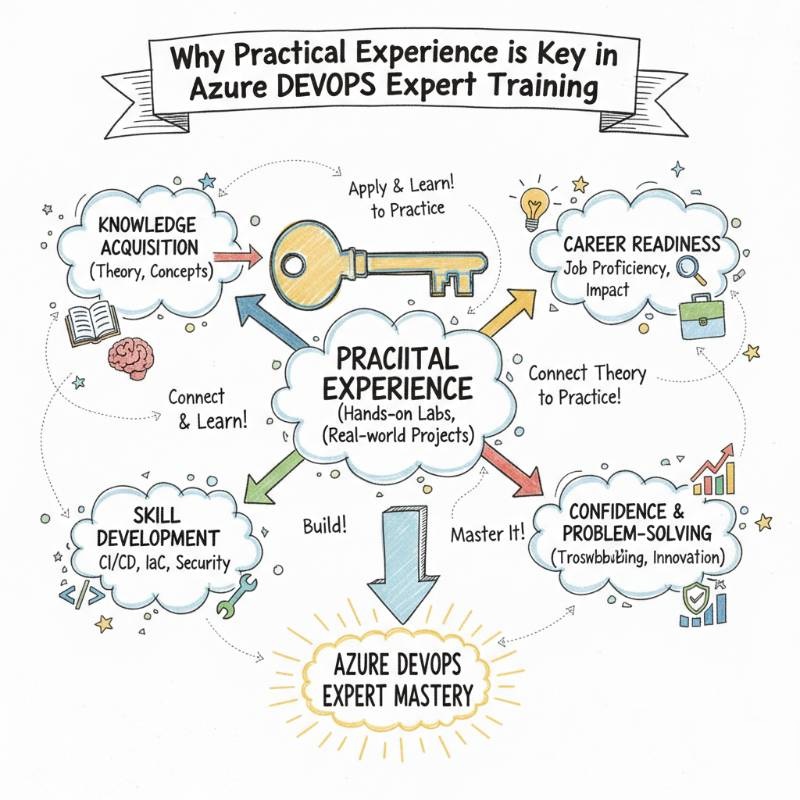
In the fast-moving world of technology, the way we manage software has changed forever. It is no longer enough to just write code; we must now master the entire journey of that code—from a developer’s thought to a live, working application. This is the heart of the Azure DevOps Engineer Expert (AZ-400) program. Over the years, I have seen many technologies come and go, but the shift toward automated and secure delivery is perhaps the most important one for any professional today.
This guide is written for working engineers and managers who want to understand how to move past basic tasks and become true experts. Whether you are in India or working with a team across the globe, mastering Azure DevOps is about more than just a certificate; it is about learning how to lead. We will look at how this program works, what you will learn, and how it can help you build a stronger, more resilient career.
Master Certification Overview
Before diving into the details, it is helpful to see how the Azure DevOps Engineer Expert fits into the professional landscape. This table summarizes the key details you need to know to plan your journey.
| Track | Level | Who it’s for | Prerequisites | Skills Covered | Recommended Order |
| DevOps | Expert | Working Engineers & Managers | AZ-104 or AZ-204 | CI/CD, Security, SRE, Monitoring | After Associate Level |
Azure DevOps Engineer Expert (AZ-400) Training
What it is
The Azure DevOps Engineer Expert (AZ-400) training is an advanced program designed to teach you how to bring people, processes, and technology together. It focuses on using the Microsoft Azure cloud and GitHub to create a smooth, automated flow of software. Instead of working in small, separated teams, this training teaches you how to create a unified system. You will learn how to design a strategy for everything from source control and security to how you monitor a live system to keep it running perfectly.
Who should take it
This program is ideal for professionals who are already working in the tech industry. If you are a software engineer who wants to lead technical projects, or a manager who needs to understand how modern teams deliver work, this is for you. It is also perfect for system administrators who want to move away from manual work and toward automation. If you enjoy solving complex problems and want to be responsible for the high-level quality of an organization, this is your path.
Skills you’ll gain
By completing this training, you will build a set of skills that make you a leader in the engineering world. You will learn to think like an architect, looking at the “big picture” of how software is delivered.
- Automated Pipelines: You will master the art of creating CI/CD pipelines that build, test, and deploy code without any manual intervention.
- Security First (DevSecOps): Learn how to build security into every step of your process, making sure your applications are safe from the start.
- Infrastructure as Code: Gain the ability to manage your cloud servers and networks using code, which makes everything more reliable and easier to scale.
- System Observability: Learn how to set up monitoring and logging so you always know how your system is performing and can fix issues before users see them.
- Collaboration Mastery: Understand how to use tools like Azure Boards to keep large teams organized and focused on the same goals.
Real-world projects you should be able to do
The true test of an expert is what they can build. After this training, you will have the knowledge to lead major projects that provide real value to a business.
- Building a Global Delivery System: You can design a system that deploys software to multiple countries at once, ensuring everyone gets the latest features safely.
- Creating a Self-Healing Cloud: You will be able to set up automation that detects when a server is failing and automatically replaces it without any downtime.
- Implementing Secure Automation: You can build a pipeline that automatically scans for security risks and blocks any code that doesn’t meet your safety standards.
- Modernizing Old Workflows: Lead a project to take a slow, manual team and turn them into a high-speed, automated unit that delivers updates every day.
Preparation plan
Getting ready for the AZ-400 requires a plan that fits into your busy work life. Here are three ways you can approach your studies:
- 7–14 Days (The Fast Track): This is for those who already use Azure DevOps every day. Use this time to focus on the modules you don’t use often, such as instrumentation or security compliance. Practice with mock exams to get used to the question style.
- 30 Days (The Professional Path): This is the best choice for most working engineers. Spend about 10 hours a week. Dedicate one week to each major area: Source Control, CI/CD, Infrastructure/Security, and Monitoring. Ensure you do at least one hand-on project each week.
- 60 Days (The Deep Dive): If you are moving into a new role, take your time. Spend the first month mastering the basics of Azure administration. Use the second month to dive deep into the expert-level strategies and build several complex pipelines from scratch.
Common mistakes
I have seen even very talented engineers struggle because they overlooked a few simple things. Avoiding these will make your journey much easier.
- Focusing Only on Tools: Remember that DevOps is about the process and the people, not just the software. Don’t skip the lessons on team strategy.
- Ignoring GitHub: GitHub is a huge part of the Microsoft ecosystem now. Make sure you understand how GitHub Actions works as well as Azure Pipelines.
- Skipping the Labs: You cannot learn automation just by reading. You must build things yourself to understand the small errors that happen in the real world.
- Forgetting Security: Security is not an afterthought. You must learn how to manage permissions and secrets correctly within your automation scripts.
Best Next Certification After This
Once you have mastered the AZ-400, your journey as an expert is just beginning. To stay ahead, you should look into specialized paths that complement your DevOps skills.
- DevSecOps Certified Professional (DSOCP): This is perfect if you want to become a leader in securing the modern software supply chain.
- SRE Certified Professional (SRECP): If you enjoy the technical challenge of keeping massive, global systems stable and fast.
- Master in DevOps Engineering (MDE): A high-level program designed for those who want to be recognized as global authorities in the field.
Choose Your Path: 6 Specialized Learning Tracks
After your initial expert training, you can choose a niche that fits your interests and career goals:
- DevOps Track: Focuses on the overall flow and culture of delivering high-quality software quickly.
- DevSecOps Track: For those who want to focus on making security a central part of every automated process.
- SRE Track: Focuses on using software engineering to solve operation problems and maintain 100% uptime.
- AIOps / MLOps Track: The future of operations—learning how to automate the world of Artificial Intelligence and Machine Learning.
- DataOps Track: Bringing the speed and discipline of DevOps to the complex world of big data and analytics.
- FinOps Track: A vital role focused on managing the cost of the cloud and making sure every dollar is spent wisely.
Role → Recommended Certifications Mapping
Depending on what you do today or where you want to go, here is how you should plan your learning:
- DevOps Engineer: AZ-400 + Kubernetes Certification + Infrastructure as Code tools.
- SRE: AZ-400 + SRE Certified Professional + Performance Monitoring tools.
- Platform Engineer: AZ-400 + CKA + Advanced Cloud Networking.
- Cloud Engineer: AZ-104 + AZ-400 + Cloud Security specializations.
- Security Engineer: AZ-400 + DevSecOps Certified Professional + Azure Security Engineer.
- Data Engineer: AZ-400 + DataOps Certified Professional + Azure Data Factory.
- FinOps Practitioner: AZ-900 + AZ-400 + FinOps Certified Professional.
- Engineering Manager: AZ-400 + DevOps Leader Certification + Modern Management programs.
Why Choose DevOpsSchool?
Choosing where you train is just as important as the certificate you are trying to earn. You need a place that understands the real world of engineering.
- Practical Mentorship: Our mentors are experts who have spent years working in the industry. They teach you what works in a real job, not just what is in a book.
- Hands-On Learning: We focus on labs. You will spend your time building and fixing real systems, so you have the confidence to do the job well.
- Updated Content: The cloud changes every week. We make sure our training is always up to date with the latest tools from Azure and GitHub.
- Career Growth: We don’t just teach you the code; we help you understand how to use these skills to get better roles and lead larger teams.
Testimonials
“The training at DevOpsSchool gave me the confidence to move from a junior role to a lead position. The focus on real-world labs was exactly what I needed.” — Rohan
“I finally understood how to integrate security into our pipelines. It has changed the way our whole team works.” — Megha
“The SRE and AZ-400 training helped me land a global role with a top tech firm. The mentorship was invaluable.” — Arjun
Next Certifications to Take
After you finish the AZ-400, it is a great idea to broaden your skills. Here are three directions you can take:
- Same Track: Get certified in Kubernetes (CKA). It is the perfect partner to Azure DevOps and is used by almost every major tech company.
- Cross-Track: Consider the AWS Certified DevOps Engineer. Being an expert in both Azure and AWS makes you very rare and valuable in the job market.
- Leadership: If you are moving into management, look into the Certified DevOps Leader program to help you lead culture changes in your company.
Top Institutions for Azure DevOps Expert Training
When you are ready to start, these institutions provide the best training and support for your journey:
- DevOpsSchool: A global leader in DevOps training, known for its hands-on approach and expert instructors who are active in the industry.
- Cotocus: Excellent for teams and individuals who want a mix of deep technical training and strategic advice for their careers.
- Scmgalaxy: A great community and resource hub that offers structured training for all levels of DevOps and cloud engineering.
- BestDevOps: Focuses on getting you career-ready quickly with simplified, high-impact training programs.
- DevSecOpsSchool: The best place to go if you want to focus heavily on the security side of the Azure cloud.
- SRESchool: Dedicated to the world of Site Reliability Engineering, helping you build systems that are always up and running.
- AIOpsSchool: Leading the way in training for the next generation of operations using AI and Machine Learning.
- DataOpsSchool: Helps you master the flow of data with the same speed and reliability as software.
- FinOpsSchool: Teaches you how to master the financial side of the cloud, making you a vital asset to any business.
FAQs on Azure DevOps Engineer Expert (AZ-400) Training
1. How difficult is the AZ-400 exam for a working professional?
It is an expert-level exam, so it is quite challenging. It covers a lot of ground, from code to infrastructure. However, if you are already working in the field and follow a structured training plan, it is very manageable.
2. How much time should I dedicate to studying?
Most people find that 30 to 60 days of consistent study is enough. If you spend 10 hours a week on a mix of reading and hands-on labs, you will be well-prepared.
3. Do I need to be a developer to pass?
No, you don’t need to be a professional programmer, but you must be comfortable reading code and writing scripts in YAML or PowerShell.
4. What are the prerequisites for the expert title?
To be officially called an “Expert,” you must first pass either the Azure Administrator Associate (AZ-104) or the Azure Developer Associate (AZ-204).
5. Can I take the training online?
Yes, instructor-led online training is a great way to learn. It allows you to interact with experts and other students from anywhere in the world.
6. Is this certification recognized by global companies?
Yes, Microsoft certifications are a gold standard worldwide. Holding this title shows employers everywhere that you have reached an expert level.
7. How often should I renew my certification?
Microsoft certifications are usually valid for one year. You can renew them for free by taking a short online assessment each year.
8. Will this training help me get a remote job?
DevOps and SRE roles are some of the most remote-friendly jobs in the world. Mastering these skills shows you can manage complex systems from anywhere.
9. What is the value of this certification in the job market?
It is one of the highest-paying technical certifications today. It proves you have the skills to lead a team through a complete digital transformation.
10. What tools are covered in the curriculum?
You will learn the entire Azure DevOps suite (Boards, Repos, Pipelines, etc.) along with GitHub, Docker, Kubernetes, and Infrastructure as Code tools.
11. Is the “Master in Azure DevOps” different from the AZ-400?
Yes, a “Master” program usually covers the AZ-400 as a base but adds much more real-world project work and management training.
12. What is the best sequence to follow?
The best path is to start with a fundamental cloud course, then move to the Associate level (AZ-104), and finally take the AZ-400 Expert training.
13. How much of the exam is based on GitHub?
GitHub has become a significant part of the AZ-400. You should be equally comfortable with both Azure Pipelines and GitHub Actions.
14. Are there labs in the actual exam?
Microsoft sometimes includes performance-based labs in the exam where you have to perform tasks in a real Azure environment.
15. Is there a lot of emphasis on security?
Yes, “Security and Compliance” is one of the major pillars of the exam. You must know how to secure your pipelines and manage sensitive data.
16. Does the training cover Agile and Scrum?
Yes, because DevOps is a culture, the training includes how to manage projects using Agile, Scrum, and Kanban within Azure Boards.
17. What happens if I fail the exam on the first try?
Microsoft has a retake policy that allows you to try again after a short waiting period. This is why mock exams and labs are so important.
18. Is the AZ-400 exam available in multiple languages?
Yes, it is available in several languages, including English, Japanese, Chinese, and others.
19. How does this compare to the Azure Solutions Architect certification?
DevOps (AZ-400) focuses on the delivery and operations process, while Solutions Architect (AZ-305) focuses on the high-level design of cloud infrastructure.
20. Why is “Instrumentation Strategy” so important?
Instrumentation is what allows you to see inside your running application. Without it, you are “flying blind.” The AZ-400 teaches you how to set this up correctly.
Conclusion
Deciding to become an Azure DevOps Engineer Expert is a major step in your career. It shows a commitment to not just doing your job, but mastering the entire process of how software is built and delivered. In my years of working with technical teams, I have found that the people who succeed are the ones who never stop learning and who look for ways to make things better, faster, and more secure. By taking this training, you are positioning yourself as a leader who can navigate the complexities of the modern cloud. The road may be challenging, but the skills you gain will stay with you for your entire career, opening doors to new opportunities and allowing you to lead the way in a digital world. Take that first step today, invest in your future, and become the expert that the industry needs.
