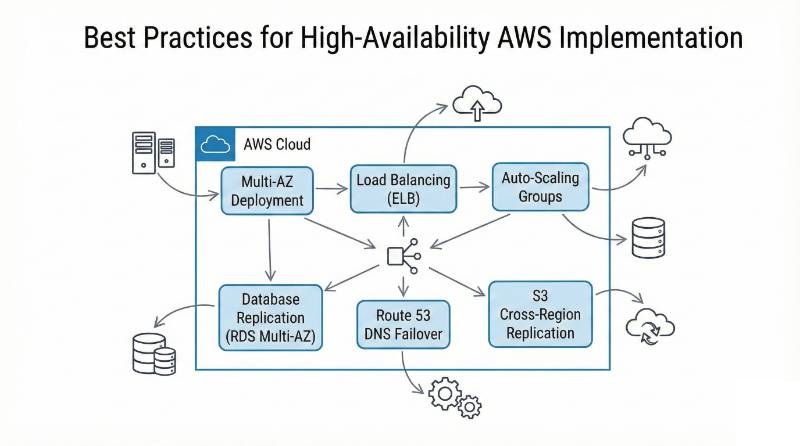
In the current landscape of engineering, building “cool features” isn’t enough anymore. The real challenge is making sure those features stay up, scale when millions of users hit them, and don’t burn through the company’s entire budget in a week. This is where cloud architecture comes in. Over the years, I’ve seen countless teams struggle because they treated the cloud like just another data center. But the cloud—Amazon Web Services (AWS) specifically—is a living ecosystem of services that require a specific mindset to master.
If you are a software engineer, a DevOps professional, or an engineering manager, the AWS Certified Solutions Architect path is the industry’s gold standard for validating that you know how to build systems that don’t just work, but thrive in production. It moves you away from thinking about a single server and forces you to see the “Big Picture” of how global traffic flows.
The AWS Certification Landscape
Before we dive deep into the Solutions Architect role, it is important to understand where it sits within the broader AWS ecosystem. AWS certifications are categorized by role and difficulty level, ranging from the broad Foundational tier to the highly specialized Specialty certifications.
Complete AWS Certification Master Table
| Track | Level | Who it’s for | Prerequisites | Skills Covered | Recommended Order |
| Cloud | Foundational | Beginners, Sales, Managers | None | Cloud basics, billing, shared responsibility | 1st |
| Architect | Associate | Engineers, Solutions Architects | 1+ year cloud exp | Compute, Storage, Networking, VPC, IAM | 2nd |
| Architect | Professional | Senior Architects, Tech Leads | Associate level cert | Complex migrations, multi-account, org strategy | 4th |
| Operations | Associate | SREs, SysOps, Ops Engineers | 1+ year ops exp | Monitoring, logging, deployment, provisioning | 2nd (alt) |
| Developer | Associate | Software Engineers, Developers | 1+ year dev exp | SDKs, CI/CD, Serverless, DynamoDB | 2nd (alt) |
| Data | Associate | Data Engineers, DBAs | Data background | ETL, Data Lakes, Glue, Redshift | 3rd |
| AI/ML | Associate | ML Engineers, Data Scientists | Python/ML basics | SageMaker, Rekognition, AI services | 3rd |
| Security | Specialty | Security Engineers, DevSecOps | 2+ years security exp | IAM deep dive, KMS, WAF, Compliance | 5th |
AWS Certified Solutions Architect – Associate (SAA-C03)
The Associate level is the “sweet spot” for most engineers. It doesn’t just ask you what a service is; it asks you how to use it to solve a complex, real-world problem. This exam expects you to be a strategist who understands the trade-offs between performance, cost, and reliability.
What it is
The AWS Certified Solutions Architect – Associate (SAA-C03) is a certification that validates your ability to design and deploy well-architected solutions on AWS. It focuses heavily on the “AWS Well-Architected Framework,” which is a set of six pillars: Operational Excellence, Security, Reliability, Performance Efficiency, Cost Optimization, and Sustainability.
The exam tests your ability to translate a business requirement into a technical blueprint. You aren’t just a coder; you are a builder who understands how to connect databases, set up secure firewalls, and ensure that if a whole data center goes dark, the users don’t even notice.
Who should take it
This certification is designed for anyone who has a hand in how an application is built and deployed. It is particularly valuable for those who have been “using” AWS but want to understand the “why” behind the infrastructure.
- Software Engineers: To understand the infrastructure your code runs on and write cloud-native apps.
- System Administrators: Transitioning from traditional on-premise setups to the cloud.
- DevOps/SRE Professionals: Who need a deep understanding of AWS networking, VPCs, and IAM.
- Engineering Managers: To help make better technical decisions regarding budget, scale, and risk.
Skills you’ll gain
Preparing for this exam forces you to look beyond your local machine and think about the global infrastructure. You learn how to move data, how to isolate networks, and how to automate recovery. It changes the way you look at a simple web request, transforming it into a journey through load balancers, private subnets, and cached edge locations.
- Design Secure Architectures: Mastering Identity and Access Management (IAM), Virtual Private Clouds (VPC), and encryption (KMS). You’ll learn how to lock down your environment so only the right people and services have access.
- High Performance & Scalability: Understanding when to use EC2 vs. Lambda vs. Containers (ECS/EKS). You’ll learn to use Auto Scaling Groups and Elastic Load Balancing to handle traffic from 10 users to 10 million.
- Resiliency & Disaster Recovery: Designing for multi-Region and multi-AZ (Availability Zone) high availability. You’ll master strategies like “Pilot Light” or “Warm Standby” to keep businesses running during outages.
- Cost Optimization: Selecting the right storage classes (S3) and compute types to save money. You’ll learn how to find “leaking” costs and use Spot Instances or Savings Plans to slash cloud bills by 70%.
Real-world projects you should be able to do
After completing this certification, you shouldn’t just have a badge; you should have the capability to build actual production-ready systems that can handle real users and real data. A true expert isn’t someone who passes a test, but someone who can sit down and draw a whiteboard diagram that actually works when deployed.
- Multi-Tier Web Application: Setting up a public-facing load balancer, auto-scaling web servers in private subnets, and a redundant database layer (RDS Multi-AZ). This project proves you understand networking and database reliability.
- Serverless Data Processing: Building a pipeline that triggers an AWS Lambda function when a file is uploaded to S3, processes it (like resizing an image), and stores metadata in DynamoDB. This shows you can build systems without managing any servers.
- Global Content Delivery: Using CloudFront and Route 53 to serve a website to users globally with low latency. You’ll learn how to use Edge Locations to bring content closer to the customer.
- Secure Hybrid Connectivity: Establishing a secure tunnel between an office network and an AWS VPC using VPN or Direct Connect, allowing for a seamless transition of legacy apps to the cloud.
Preparation Plan
| Timeline | Focus Area |
| 7–14 Days | The Reviewer: Best for those with 1–2 years of hands-on experience. Focus on taking 5-10 mock exams and reading the FAQs for core services like S3, EC2, and VPC. |
| 30 Days | The Professional: For engineers who use AWS daily but maybe only one or two services. Spend 1 hour a day on labs and 1 hour on theory. Focus on the “Well-Architected” pillars. |
| 60 Days | The Newcomer: For those transitioning from other fields. Spend the first 30 days building small projects (Free Tier) and the last 30 days focusing on exam-specific patterns and whitepapers. |
Common Mistakes
I’ve seen many smart engineers fail because they treated this like a memorization test. It isn’t. The exam is 100% scenario-based, and the “correct” answer depends on the specific constraint (e.g., “lowest cost” vs. “highest performance”).
- Ignoring the “Well-Architected” Pillars: People often choose the “coolest” service rather than the most “cost-effective” or “resilient” one. You must read the question carefully to see if the business cares more about speed or the bill.
- VPC Networking Confusion: Misunderstanding the difference between Security Groups (stateful) and Network ACLs (stateless) is a classic trap. If you get these mixed up, you’ll lose easy points.
- Over-Reliance on Dumps: Exam patterns change. If you don’t understand why a solution is correct, the exam will catch you out with slight variations in the scenario.
- Skipping the Labs: Theoretical knowledge falls apart when you have to troubleshoot a real connection issue in a VPC. You need to actually log in to the console and “break” things to understand them.
Choose Your Path: 6 Specialized Learning Journeys
Cloud architecture is the foundation. Once you have the architect mindset, you can specialize in one of these high-growth areas.
1. The DevOps Path (Automation & Delivery)
Focuses on the bridge between dev and ops. You learn how to automate the entire software lifecycle so code goes from a developer’s laptop to production in minutes.
- Journey: AWS Solutions Architect → AWS Certified DevOps Engineer Professional → Certified DevOps Professional (CDP).
2. The DevSecOps Path (Security First)
Integrating security into the heartbeat of the pipeline. In this path, you become a “security architect” who ensures that vulnerabilities are caught automatically before they ever reach the cloud.
- Journey: AWS Solutions Architect → AWS Security Specialty → DevSecOps Certified Professional (DSOCP).
3. The SRE Path (Reliability & Scale)
Ensuring the system never stays down. You focus on observability, monitoring, and building systems that heal themselves when they detect a problem.
- Journey: AWS Solutions Architect → AWS SysOps Administrator → Site Reliability Engineering Certified Professional (SRECP).
4. The AIOps/MLOps Path (The Intelligent Cloud)
Using AI to manage operations and deploying ML models. This is for those who want to use machine learning to predict when a server will fail before it actually happens.
- Journey: AWS Solutions Architect → AWS Machine Learning Engineer → MLOps Certified Professional (MLOCP).
5. The DataOps Path (Data at Speed)
Managing the flow of data pipelines reliably. You focus on big data, data lakes, and ensuring that the company’s data is clean, secure, and ready for analytics.
- Journey: AWS Solutions Architect → AWS Data Engineer → DataOps Certified Professional (DOCP).
6. The FinOps Path (Cloud Economics)
Optimizing every cent spent on the cloud. This path is for the “Efficiency Experts” who bridge the gap between engineering and finance to save millions.
- Journey: AWS Solutions Architect → AWS Cloud Practitioner → Certified FinOps Professional.
Role → Recommended Certifications Mapping
| If your role is… | You should take… |
| DevOps Engineer | AWS Solutions Architect + Certified DevOps Engineer |
| SRE | AWS Solutions Architect + SRE Certified Professional |
| Platform Engineer | AWS Solutions Architect + Certified Kubernetes Administrator (CKA) |
| Cloud Engineer | AWS Solutions Architect + AWS SysOps Administrator |
| Security Engineer | AWS Solutions Architect + AWS Security Specialty |
| Data Engineer | AWS Solutions Architect + AWS Data Engineer Associate |
| FinOps Practitioner | AWS Solutions Architect + Certified FinOps Architect |
| Engineering Manager | AWS Solutions Architect + Certified DevOps Manager |
Leading Institutions for Training and Certification
Choosing where to learn is as important as what you learn. These institutions provide the hands-on training required to bridge the gap between a certificate and a career.
- DevOpsSchool: This is a top-tier powerhouse for anyone looking to master the “Ops” world. They offer deep-dive training in AWS, DevOps, and SRE, with trainers who are actual industry practitioners. Their curriculum is updated constantly to match the latest cloud changes, making them a go-to for serious engineers.
- Cotocus: Specializing in bootcamp-style training, Cotocus is excellent for professionals who want a fast-paced, immersive experience. They focus on real-world labs and case studies, ensuring that you don’t just learn the theory but can also execute the tasks in a production environment.
- Scmgalaxy: A massive community-driven platform that offers extensive resources on version control, configuration management, and cloud architecture. They are well-known for their detailed blogs and step-by-step tutorials that help beginners and experts alike navigate complex technical stacks.
- BestDevOps: This institution focuses on providing streamlined, industry-standard training for the most in-demand cloud roles. They offer a clear path for students to move from foundational knowledge to advanced architectural skills, with a strong emphasis on career outcomes.
- devsecopsschool: As the name suggests, they are the leaders in the security-focused DevOps space. They teach you how to bake security into the CI/CD pipeline, making it an essential stop for anyone moving into a Security Engineer or DevSecOps role.
- sreschool: Dedicated to the art of Site Reliability Engineering, this school focuses on the principles of high availability and system resilience. They bridge the gap between traditional operations and modern, software-defined infrastructure management.
- aiopsschool: This is where the future of operations is taught. They focus on how to integrate AI and Machine Learning into the IT operations lifecycle to build smarter, self-healing infrastructures that require less human intervention.
- dataopsschool: For those who want to master the lifecycle of data, this school provides the tools to manage large-scale data pipelines. They focus on the reliability, speed, and security of data flow within the cloud.
- finopsschool: Focused on the financial side of the cloud, they teach engineers and managers how to take ownership of cloud costs. They are the experts in helping organizations get the most “bang for their buck” in AWS.
Next Certifications to Take (Top 3 Directions)
Once you have your Associate badge, you have three primary directions to take your career based on current global engineering trends.
- Same Track (The Specialist): AWS Certified Solutions Architect – Professional. This is the “boss level” for architects. It moves away from single-account setups and focuses on complex, multi-account, global enterprise strategies.
- Cross-Track (The Multi-Skilled): AWS Certified Security Specialty. Security is no longer “someone else’s problem.” Mastering KMS, WAF, and GuardDuty makes you a lethal “T-shaped” engineer who can design and defend simultaneously.
- Leadership (The Strategic): Certified DevOps Manager (CDM). If you are aiming for a VP or Director of Engineering role, this certification focuses on the culture, people, and processes of delivery, rather than just the code.
FAQs: AWS Certified Solutions Architect (Career & Value)
- Is the AWS Solutions Architect exam difficult?It is moderately difficult. It requires a mix of theoretical knowledge and practical reasoning. You can’t just memorize; you have to think like an architect.
- How much time is needed for preparation?Usually 2 to 3 months for a working professional, assuming 10-12 hours of study per week.
- Are there any prerequisites?Technically, no. However, 6 months to 1 year of hands-on AWS experience is strongly recommended to understand the context of the questions.
- Should I take Cloud Practitioner first?If you are completely new to IT (don’t know what a server or a database is), yes. If you are already a Software Engineer, jump straight to Solutions Architect Associate.
- Does this certification expire?Yes, it is valid for 3 years. You can recertify by taking the Professional exam or the updated Associate exam.
- What is the value of this certification globally?It is one of the most recognized certifications in the world. It is often a mandatory requirement for Cloud roles in major tech hubs like Bangalore, London, and San Francisco.
- Can I get a job just with this certification?The certification gets you the interview. Your hands-on projects and your ability to explain architectural trade-offs are what get you the job.
- Will I need to learn coding for this?Not for the Associate level. You need to be comfortable reading JSON and YAML for configuration, but you don’t need to write Java or Python.
- How much does the exam cost?It typically costs USD 150, but many companies will reimburse you once you pass.
- What is the passing score?You need a 720 out of 1000 to pass. The questions are weighted, so some are worth more than others.
- Can I take the exam from home?Yes, AWS offers online proctored exams through Pearson VUE, so you can take it from your home or office.
- What happens if I fail?You must wait 14 days before you can retake the exam. You will need to pay the full fee again, so make sure you are ready.
FAQs: AWS Certified Solutions Architect (Exam Specific)
- What is the main focus of SAA-C03?The current version places a huge emphasis on Security (30%) and Resiliency (26%). You must know how to design systems that are both locked down and fail-safe.
- How many questions are in the exam?65 questions, which can be either multiple choice (one correct answer) or multiple response (two or more correct answers).
- How long is the exam?You have 130 minutes. This is roughly 2 minutes per question. Manage your time wisely!
- What are the main services I should study?EC2, S3, VPC, RDS, Lambda, and IAM are the “Big Six.” If you don’t know these inside out, you will struggle.
- Is there a lot of networking?Yes. You must understand subnets, route tables, internet gateways, and NAT gateways. Networking is the “glue” that holds your architecture together.
- What about storage?You need to know the different S3 storage classes (Standard, IA, Glacier) and when to use EBS vs. EFS.
- Are there any new services on the exam?AWS regularly adds new services like Global Accelerator, FSx, and Lake Formation to the exam pool. Stay updated with the official guide.
- Is there any math involved?Only basic cost calculations. You might need to compare the cost of two different architectures over a year.
Conclusion
Passing the AWS Certified Solutions Architect – Associate is more than just a line on your resume; it is a fundamental shift in how you perceive software development and infrastructure management. You stop thinking about isolated components and start seeing a global, interconnected system that must be defended and optimized at every layer. In my experience, the engineers who truly excel are those who don’t just “use” the cloud, but understand the underlying architectural bones that make it work. This certification provides the structural integrity your career needs to scale to the next level. It forces you to learn the best practices that separate the weekend hobbyists from the professional architects who build the backbone of the internet. Whether you are looking to become a DevOps lead, an SRE, or a future CTO, this is your entry point. Start your journey today, build the projects, break things in the Free Tier, and earn your place among the architects of the modern digital world.
