The shift toward on-demand public cloud infrastructure has revolutionized engineering velocity. Development teams can build, test, and release software at unprecedented speeds without the friction of physical hardware procurement. Yet, this shift from rigid, upfront capital expenditure to dynamic, consumption-based operating costs introduces a major corporate challenge: uncontrolled, opaque infrastructure spending.
In standard data center models, capacity planning was deliberate, centralized, and slow. In the modern cloud ecosystem, any software developer or DevOps specialist can spin up high-performance compute clusters or managed data pipelines with automated scripts. When engineering velocity is decoupled from fiscal visibility, organizations face compounding cloud waste, unpredictable invoices, and friction between tech teams and leadership.
Traditional accounting approaches are structurally incapable of handling the continuous, hourly fluctuation of cloud consumption. Aligning innovation with financial accountability requires a shared operating model where engineering, finance, and product stakeholders work together. Mastering cloud financial governance has quickly evolved into an indispensable capability for technical practitioners and forward-thinking enterprises.
What Is FinOps?
FinOps is an operational framework and cultural standard designed to bring fiscal discipline and real-time visibility to variable cloud environments. Rather than imposing arbitrary budget freezes, it empowers technical and business teams to balance infrastructure performance, deployment speed, and financial efficiency.
At its core, this discipline turns cloud costs into an ongoing engineering metric. With transparent spend telemetry, developers understand the direct budgetary impact of their design choices, while finance leaders gain clear insight into how infrastructure investments support business growth. FinOps shifts organizational focus from simple cost reduction to maximizing the return on investment of every cloud service consumed.
Why Cloud Cost Optimization Matters
Without active oversight and structured processes, cloud environments steadily accumulate inefficiencies. Companies operating without established financial controls frequently deal with:
- Over-allocated compute nodes and provisioned database tiers that vastly exceed peak user traffic.
- Orphaned storage blocks, unattached static IPs, and abandoned database snapshots left behind after testing phases.
- Sudden, unexplained budget variances that disrupt monthly forecasting.
- Architecture designs that rely on expensive legacy patterns instead of cost-effective modern cloud services.
- Inadequate metadata and tagging, making accurate cost attribution across business units impossible.
- Unreliable budget models caused by disconnected planning between development roadmaps and financial forecasts.
Adopting continuous optimization practices enables businesses to eliminate digital waste, streamline resource consumption, and build dependable financial projections.
Core Principles of an Effective FinOps Practice
A robust cloud governance practice is grounded in several essential principles:
- Visibility: Providing distributed teams with timely, granular data regarding their resource consumption and spend trends.
- Accountability: Fostering an engineering culture where teams own their cloud footprint and the associated bills.
- Collaboration: Establishing open communication channels and unified vocabulary across finance, engineering, and product operations.
- Continuous Optimization: Treating cost efficiency as an ongoing operational habit rather than an occasional cleanup exercise.
- Data-Driven Decisions: Leveraging usage telemetry, workload patterns, and unit economics to guide architectural choices.
- Business-Value Measurement: Evaluating infrastructure investments by their contribution to revenue, feature delivery, and user growth.
Key Cloud Cost Optimization Techniques
Managing infrastructure spend effectively requires implementing continuous operational, design, and provisioning refinements.
Rightsizing Resources
Many workloads run on computing instances provisioned with excessive CPU and memory headroom. By evaluating historical telemetry, engineers can downscale oversized instances to align closely with actual operational demands without risking service stability.
Removing Unused Resources
Rapid deployment pipelines often leave behind obsolete infrastructure. Regularly detecting and purging disconnected persistent volumes, redundant backups, idle load balancers, and unused IP addresses eliminates baseline financial leakage.
Autoscaling
Application demand shifts throughout the day. Implementing dynamic autoscaling ensures that compute and container pools automatically expand during traffic surges and scale back down during quiet periods, preventing payment for dormant capacity.
Scheduling Non-Production Resources
Sandbox, staging, and QA environments rarely require around-the-clock availability. Automating shutdown schedules during evenings, weekends, and non-working hours cuts substantial runtime costs from development environments.
Monitoring Usage and Spending
Setting up real-time observability alongside automated anomaly detection flags irregular spend patterns immediately. This allows technical teams to fix provisioning mistakes, configuration drift, or runaway background jobs before they inflate monthly costs.
Budgeting and Forecasting
Synthesizing historical utilization patterns with upcoming feature delivery plans allows organizations to produce reliable budget forecasts. This visibility also informs structured discount commitments, such as reserved capacity and long-term savings plans.
Skills Needed for a FinOps Professional
Excelling in cloud economics calls for a balanced combination of technical acumen, analytical depth, and clear communication:
- Practical grounding in cloud platforms, managed services, and modern application infrastructure.
- Thorough knowledge of provider rate structures, discount models, and cost allocation tag frameworks.
- Strong data analytical capabilities to parse complex billing data and utilization logs.
- Familiarity with financial forecasting, variance tracking, and unit cost modeling.
- Direct knowledge of resource rightsizing, compute optimization, and reservation management.
- Communication expertise to bridge the gap between technical terminology and executive-level business goals.
- Experience with governance frameworks, automated alerting, and budget enforcement policies.
FinOps Practitioner vs FinOps Engineer
As the field grows, organizations divide responsibilities between analytical governance and technical execution.
FinOps Practitioner
The practitioner role centers on financial analysis, governance standards, organizational change, and cross-functional alignment.
Core responsibilities include:
- Setting up showback and chargeback systems to ensure transparent internal cost distribution.
- Designing executive dashboards that translate raw usage records into clear business metrics.
- Partnering with finance managers to refine quarterly budgets and capital plans.
- Defining tag taxonomies, policy standards, and governance rules across organizational accounts.
- Guiding conversations between engineering leads, product managers, and executive leadership.
FinOps Engineer
The engineer role focuses on hands-on automation, tooling integration, and architectural remediation.
Core responsibilities include:
- Writing custom automation scripts to identify, rightsize, or clean up idle cloud infrastructure.
- Embedding cost governance policies and tagging requirements directly into infrastructure-as-code templates.
- Integrating real-time cost-estimation feedback loops into CI/CD delivery pipelines.
- Evaluating container and microservice resource requests to optimize cluster density and efficiency.
- Deploying and operating third-party cost visibility, observability, and reporting platforms.
Why FinOps Training Is Important
Because cloud ecosystems expand rapidly with ever-changing pricing structures, managing cloud spend through trial and error leads to expensive missteps. Enrolling in structured FinOps Training provides professionals with proven frameworks to evaluate infrastructure economics, enforce governance, and execute sustainable cost reductions.
Formal education equips engineers and financial specialists with practical methodologies to analyze large-scale billing exports, spot systemic inefficiencies, and establish accountability across modern engineering organizations.
Choosing the Right FinOps Course or Certification Training
Finding an effective educational pathway depends on individual career aspirations and enterprise goals. When reviewing options for a FinOps Course, prospective students should consider:
- Curriculum Breadth: The program should thoroughly address pricing structures, resource allocation, optimization tactics, and cross-departmental collaboration models.
- Hands-on Labs: Quality courses incorporate real billing datasets, simulated enterprise architectures, and practical remediation tasks.
- Multi-Cloud Perspective: The curriculum should explore pricing mechanics across major ecosystems including AWS, Microsoft Azure, and Google Cloud Platform.
- Credential Preparation: A structured FinOps Certification Training program systematically prepares professionals for accredited examinations. Securing an industry-recognized FinOps Certification validates practical expertise and demonstrates professional competence to peers and employers.
Online and Corporate FinOps Training
Educational delivery models are structured to support both independent professionals and complete enterprise teams.
FinOps Online Training
Designed for busy systems engineers, cloud architects, and financial analysts, FinOps Online Training provides the flexibility to study remotely while managing day-to-day work commitments. Accessible platforms offer structured learning modules, live guidance, and downloadable reference materials from any location.
Corporate FinOps Training
Enterprises standardizing their cloud operations benefit significantly from Corporate FinOps Training. Training entire functional units—including development leads, DevOps engineers, procurement specialists, and financial controllers—fosters a unified operational language. This shared perspective accelerates company-wide adoption, enhances financial accountability, and embeds cost awareness into everyday engineering workflows.
FinOps Training in India
India serves as an essential global center for enterprise software engineering, platform operations, and cloud architecture. With technology enterprises throughout the region managing sprawling cloud deployments, the demand for cost-governance expertise has grown steadily.
DevOps engineers, cloud administrators, and technical leads across the country are broadening their capabilities to include cloud financial operations. Accessing FinOps Training in India through flexible digital programs enables professionals to master cloud economics, achieve professional credentials, and deliver measurable value to enterprise clients.
How to Start a FinOps Career
Building a successful career in cloud financial management involves combining fundamental technical knowledge with financial analysis skills.
Build Cloud Fundamentals
Develop a solid understanding of core cloud components, compute instances, storage options, container platforms, and networking topologies across leading providers.
Understand Cloud Billing
Study provider billing metrics, invoice formats, and rate calculations. Learn how on-demand rates compare with committed usage tiers, spot capacity, and data transfer costs.
Learn FinOps Concepts
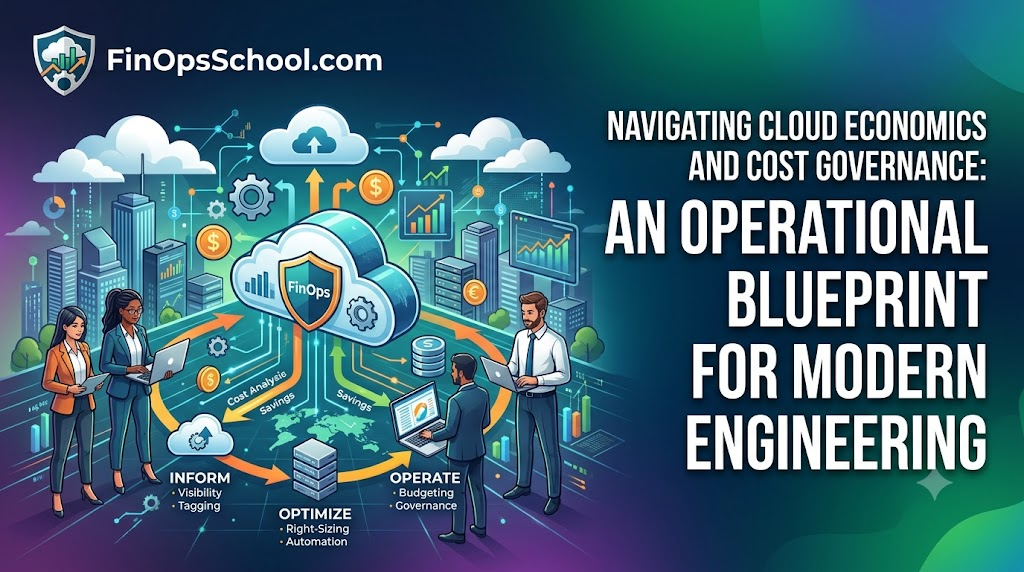
Master core operational phases: Inform (visibility and allocation), Optimize (rate reduction and usage efficiency), and Operate (continuous tracking and automated governance). Focus on how robust metadata tagging drives transparent reporting.
Practice Cloud Cost Optimization
Gain hands-on skills through specialized Cloud Cost Optimization Training. Practice spotting idle instances, refining storage tiering strategies, and analyzing compute utilization metrics in lab environments.
Develop Reporting and Analysis Skills
Master data analysis and reporting tools to transform raw billing metrics into executive dashboards, department summaries, and actionable trend analyses.
Choose Relevant Training
Align your learning pathway with your target career direction. Professionals pursuing reporting, allocation, and governance paths benefit from FinOps Practitioner Training, while those focusing on automation scripts and pipeline integration should pursue FinOps Engineer Training.
Consider Professional Certification
Validating your skills through formal testing confirms your grasp of financial management principles and strengthens professional credibility.
Build Practical Experience
Apply your knowledge to test environments, personal lab accounts, or internal projects by setting up budget guardrails, creating custom dashboards, and conducting routine infrastructure health checks.
How FinOpsSchool Can Help Professionals
For those seeking clear, structured guidance, FinOpsSchool provides specialized education focused on cloud financial operations, technical optimization, and career development.
FinOpsSchool offers focused learning tracks suited for both analytical governance roles and technical engineering paths. Its curriculum emphasizes real-world application, showing learners how to interpret complex billing streams, establish practical tagging policies, and execute tangible savings strategies in enterprise environments. By pairing comprehensive training with thorough certification preparation, FinOpsSchool supports technical specialists and finance teams in building enduring cloud financial management capabilities.
Common Mistakes Organizations Make With Cloud Costs
Enterprises frequently encounter regular stumbling blocks when overseeing cloud expenditure:
- Siloing Costs Within Finance: When technical teams lack visibility into workload costs, they cannot design systems with financial efficiency in mind.
- Inconsistent Tagging Standards: Missing or disordered resource tags prevent accurate cost allocation across projects, teams, or departments.
- Leaving Non-Production Systems Running: Allowing development, staging, and sandbox environments to run unattended overnight results in unnecessary expenses.
- Securing Discounts on Inefficient Systems: Purchasing commitment plans for unoptimized or oversized workloads simply locks in systemic waste.
- Treating Optimization as an Occasional Task: Cost management requires ongoing operational attention rather than sporadic, reactive reviews.
Future of FinOps and Cloud Cost Optimization
As cloud architectures become more sophisticated, cloud financial operations continues to adapt:
- Cross-Cloud Financial Standardization: Managing infrastructure across diverse cloud providers requires centralized, normalized cost ingestion and reporting.
- Automated Policy Enforcement: Routine remediation actions, such as shutting down unattached resources or rightsizing compute, will increasingly run on policy-driven automation.
- AI-Enhanced Predictive Analytics: Intelligent algorithms will help teams detect spending anomalies faster, optimize discount procurement, and forecast seasonal demand.
- Container and Microservice Cost Granularity: As containerized architectures scale, attributing shared Kubernetes cluster costs down to namespaces, pods, and microservices becomes vital.
- Sustainability and Carbon Metrics: Cost efficiency and environmental goals will increasingly merge, linking compute utilization metrics directly to corporate sustainability targets.
Conclusion
The cloud provides immense flexibility and speed, but capturing its complete business value requires deliberate financial management. FinOps provides the shared visibility, individual accountability, and cross-team alignment necessary to ensure infrastructure spending drives meaningful business results.
Cultivating skills in cloud financial governance enables professionals to directly influence organizational efficiency and infrastructure strategy. Whether mastering foundational governance or building automated engineering safeguards, specialized programs—such as those delivered by FinOpsSchool—offer a clear roadmap for anyone looking to excel in modern cloud operations.
