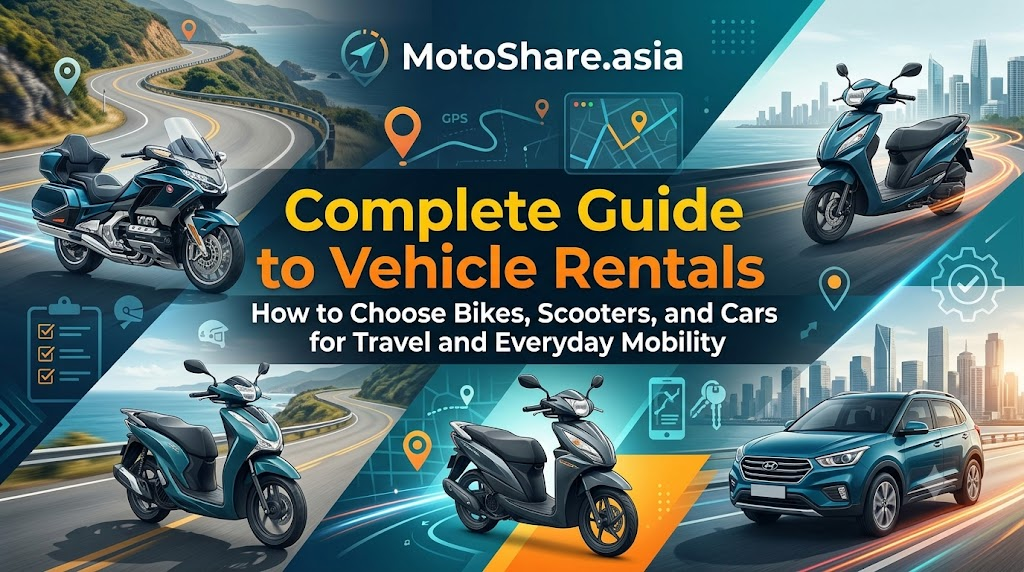
Stepping out of an arrival terminal only to face aggressive taxi touts, surging ride-hailing fees, or confusing bus routes can quickly drain the excitement from any trip. While mass transit serves fixed corridors, it rarely aligns with the spontaneous detours that make traveling worthwhile. Securing an independent vehicle gives you back full control over your time, whether you are running errands in a crowded metro or setting out on an open highway. As self-drive mobility options expand across India and neighboring Asian getaways, exploratory platforms such as MotoShare.asia help travelers evaluate vehicle classes, survey regional options, and understand the rental process before making commitments.
Why Vehicle Rentals Are Useful for Modern Travelers
Opting for an independent vehicle provides distinct practical advantages over taxis, tour buses, and public transport:
- Complete Itinerary Flexibility: You dictate your departure times, route choices, and spontaneous detours without needing to coordinate around bus timetables or negotiated taxi stops.
- Cost Efficiency on Multi-Stop Days: Booking multiple individual point-to-point cab rides across a single day often accumulates higher fares than paying a fixed 24-hour vehicle rental rate.
- Access to Remote Destinations: Public transit networks frequently bypass scenic viewpoints, secluded coastal coves, heritage villages, and rural trails. Having your own wheels bridges that last-mile gap.
- Tailored Fleet Selection: Travel needs differ. Solo riders and couples can choose fuel-efficient gearless scooters for urban hops, while families can opt for five-seater hatchbacks or SUVs with ample luggage space.
- Privacy and Comfort: A private vehicle offers a clean, personal space where personal belongings can be stored securely throughout daytime sightseeing stops.
Realizing these benefits depends on weighing local driving conditions, seasonal fuel costs, mandatory security deposits, and rental terms. A vehicle that works perfectly for a coastal holiday may prove exhausting in dense urban gridlock, making it essential to choose the correct category before committing.
Understanding the Different Rental Options
Different journeys call for distinct vehicle capabilities. Understanding the trade-offs among motorcycles, scooters, and self-drive cars ensures your trip remains comfortable and manageable.
Bike Rental in India
A motorcycle is the preferred choice for experienced riders planning highway travel, hilly climbs, and extended multi-day road trips. A geared motorcycle provides the engine braking, ground clearance, and suspension travel needed to tackle diverse road surfaces, from expressways to uneven rural routes.
When seeking a bike rental in India, licensing and experience come first. Operating a motorcycle requires a valid two-wheeler driving licence with gear (or an International Driving Permit for foreign nationals). Riders must prepare for local traffic patterns, variable road surfaces, and seasonal weather shifts. Adequate riding gear—including a certified full-face helmet, durable jacket, gloves, and sturdy footwear—is essential regardless of travel distance.
Scooter Rental in India
Gearless scooters represent the most accessible two-wheeler option for urban commuting and casual holiday sightseeing. Featuring automatic transmissions, flat floorboards for carrying small daypacks, and under-seat storage, scooters are simple to operate in stop-and-go city traffic.
Opting for scooter rental in India makes practical sense in compact towns and beach hubs where narrow streets make parking a car difficult. However, scooters have smaller wheel diameters and lighter chassis, making them less suited for steep inclines, uneven highway surfaces, or extended long-distance riding. Familiarity with local traffic density and steady low-speed braking technique are necessary to navigate busy intersections safely.
Self Drive Bike Rental
A self drive bike rental arrangement gives the renter full physical possession and driving responsibility for a motorcycle over a contracted period. Under standard industry workflows, you select your vehicle class, verify age and licence eligibility, sign an operating agreement, submit a security deposit, and receive the keys following an inspection.
Renters are responsible for returning the motorcycle in the same mechanical and aesthetic condition in which it was received, subject to reasonable operational wear. Familiarizing yourself with the operator’s designated fuel policy (such as like-for-like returns) and breakdown coverage terms prevents unexpected settlement disputes at drop-off.
Self Drive Car Rental in India
For family vacations, group travel, monsoon journeys, or luggage-heavy itineraries, booking a self drive car rental India option delivers unmatched weather protection, passenger safety, and carrying capacity. Cars eliminate exposure to heat, dust, and rain, allowing multiple passengers to share driving duties during long hauls.
Car rental in India requires checking driver eligibility requirements, which often specify a minimum age (commonly 21 or 24 years) and at least one to two years of driving experience. Renters should inspect luggage boot dimensions, confirm fuel policies, review comprehensive insurance deductible caps, and clarify whether inter-state permit taxes are included in the daily rate.
How to Rent a Bike Online Safely
Modern digital booking allows travelers to organize mobility well ahead of arrival. When you arrange to rent a bike online, following a disciplined, step-by-step verification process prevents common booking pitfalls.
Identify Dates & Needs ➔ Compare Total Quotes ➔ Review Terms & Deposits ➔ Verify Documents ➔ Document Vehicle Condition
- Pinpoint Destination and Itinerary Duration: Clarify your route profile, passenger count, luggage volume, and exact pick-up/drop-off dates.
- Select the Appropriate Vehicle Category: Choose between automatic scooters, commuter bikes, tourers, or four-wheelers based on road conditions and rider experience.
- Compare Aggregate Pricing: Evaluate base daily rates alongside mandatory taxes, insurance coverage, platform service fees, and refundable security deposits.
- Examine Provider Eligibility Rules: Check required driving licence classifications, accepted age thresholds, and accepted payment modes.
- Inspect Deposits and Cancellation Terms: Determine how security deposits are collected, how quickly refunds are processed, and whether booking changes incur penalty fees.
- Confirm Reservation via Verified Channels: Complete your reservation through formal booking systems that generate unambiguous digital receipts and booking IDs.
- Conduct a Thorough Pre-Departure Walkaround: Inspect bodywork, tires, chain tension, lights, fluid levels, and horn function before signing off on the handover manifest.
- Archive Paperwork and Receipts: Retain digital and paper copies of the rental agreement, registration certificate (RC), third-party insurance, and pollution under control (PUC) document.
- Return Promptly per Terms: Return the vehicle clean, on time, and with the agreed fuel level to ensure prompt refund of your security deposit.
When comparing your travel mobility options across various destinations, online research platforms like MotoShare.asia offer a starting point for exploring vehicle categories, reviewing general rental requirements, and understanding what to expect during booking.
Exploring Bike Rental in Goa
Goa’s coastal geography makes two-wheelers a primary choice for visitors. Travelers moving between North Goa’s vibrant markets and South Goa’s quieter heritage towns often find that a two-wheeler allows easy navigation through narrow village lanes, beach approach roads, and crowded seaside parking areas.
Arranging a bike rental in Goa requires understanding unique local operating factors:
- Seasonal Demand Shifts: Rates and vehicle availability fluctuate significantly between monsoon off-peak months and peak winter holiday seasons.
- Strict Traffic Enforcement: Goa traffic police routinely check helmet compliance, valid driving licences, vehicle registration papers, and tourist permits. Both rider and pillion passenger are legally required to wear certified protective helmets.
- Yellow-Plate Commercial Registration: Rental two-wheelers in Goa must carry distinctive black-and-yellow commercial registration plates. Operating a private white-plate vehicle under an informal rental arrangement is illegal and leaves you vulnerable to impoundment and fines.
- Narrow Village Roads and Night Visibility: Coastal roads feature tight blind turns, crossing pedestrians, stray cattle, and limited street illumination after dusk. Prudent speeds and defensive riding are critical.
Finding Bike Rental in Bangalore
As a bustling metropolitan tech center, Bangalore presents a very different travel environment. Navigating arterial corridors like Outer Ring Road, Indiranagar, and Whitefield exposes drivers to dense peak-hour congestion. For visitors attending corporate meetings, college students settling into campus, or residents planning weekend rides out toward Nandi Hills or Mysore, two-wheelers offer practical agility.
Securing a reliable bike rental in Bangalore requires strategic planning:
- Navigating Peak Congestion: Commuters should plan routes around morning and evening rush hours, relying on digital mapping to identify less congested side avenues.
- Parking Logistics: Dedicated two-wheeler parking zones exist across metro stations and commercial hubs, but sidewalk parking is strictly penalized with towing and fines.
- Weather Readiness: Bangalore’s sudden rain showers mean carrying light waterproof apparel and a secure waterproof pouch for smartphones used as navigational aids is always sensible.
- Engine Size Selection: A fuel-efficient 110cc–125cc scooter suits short city hops, whereas an engine displacement of 250cc or more provides smoother highway performance for outward weekend rides.
Car Rental in India: When Is It the Better Choice?
While two-wheelers excel in nimble short-range travel, reserving a self-drive car rental in India is often the superior decision under specific travel circumstances:
| Decision Factor | Two-Wheeler Rental (Scooters & Motorcycles) | Four-Wheeler Rental (Cars & SUVs) |
| Travel Group Size | Solo travelers or couples (1–2 passengers maximum). | Families, corporate colleagues, or groups of 3–7 people. |
| Luggage Capacity | Limited to small backpacks, tail bags, or footboard space. | Accommodates multiple large suitcases and travel bags securely. |
| Weather Protection | Direct exposure to heavy monsoons, heatwaves, dust, and wind. | Enclosed, climate-controlled cabin offering year-round comfort. |
| Highway Safety & Range | Requires high rider stamina, frequent breaks, and safety gear. | Higher stability at sustained highway speeds with crumple zones and airbags. |
| Total Travel Expense | Minimal fuel consumption; lower base rental charges and deposits. | Higher fuel, toll, and deposit costs, offset when split across multiple passengers. |
When calculating car rental in India budgets, always factor in interstate entry taxes, FASTag highway toll deductions, fuel usage, and commercial security deposits alongside the advertised baseline daily charge.
Motorcycle Rental Across Asia
Independent vehicle touring extends well beyond domestic borders. Across broader Asian tourist destinations—including Thailand, Vietnam, Indonesia, and Nepal—motorcycle rental Asia services represent a classic way to experience countryside vistas, mountain passes, and cultural hubs at an authentic pace.
Renting two-wheelers internationally introduces essential cross-border considerations:
- Licensing Requirements: Most Asian jurisdictions do not recognize domestic driving licences alone; an International Driving Permit (IDP) stamped for motorcycles, held alongside your home national licence, is legally required.
- Insurance Limitations: Standard travel health insurance policies frequently exclude injuries sustained on motorized two-wheelers unless an explicit motorcycle rider rider-endorsement is purchased, especially for engine sizes exceeding 125cc.
- Differing Traffic Laws and Flow: Driving sides, right-of-way practices, road surface quality, and local driver behavior vary widely between nations.
- Passport Withholding Practices: Reputable providers execute formal rental contracts accompanied by cash deposits or credit card pre-authorizations. Never hand over an original passport as rental collateral; offer a certified photocopy instead.
How to Choose the Right Rental Platform
Selecting a vehicle provider requires looking past surface-level promotional banners. Use this objective checklist to evaluate rental operators and booking aggregators before committing:
- Transparent Cost Structure: The platform must display all applicable taxes, peak-season surcharges, insurance additions, and processing fees before payment processing.
- Clear Refundable Deposit Terms: Clear timelines must detail exactly how, when, and through what payment method your security deposit will be released after drop-off.
- Legally Compliant Commercial Fleets: Vehicles must possess legitimate commercial hire permits (e.g., black-and-yellow number plates in India) with up-to-date fitness and pollution certifications.
- Well-Defined Mileage Limits: Confirm whether your booking offers unlimited mileage or operates on a capped daily kilometer allowance with fixed per-kilometer overage charges.
- Accessible Roadside Assistance: Review what operational help is guaranteed if you experience flat tires, mechanical breakdowns, or dead batteries midway through your itinerary.
- Fair Dispute Procedures: Examine customer feedback regarding vehicle check-in integrity, damage inspections, and operational dispute management.
Platforms like MotoShare.asia function as exploratory directories where prospective renters can discover mobility categories, evaluate rental terms, and assess general service arrangements.
Common Mistakes to Avoid When Renting a Vehicle
Steering clear of standard rental mistakes protects your wallet and guarantees peace of mind on the road:
- Skipping a Detailed Pre-Rental Inspection: Renters who drive off without documenting pre-existing vehicle scuffs risk being billed for damage they did not cause.Solution: Take a continuous 60-second walkaround video and high-resolution photos of all body panels, tires, mirrors, and meter clusters before leaving the pickup yard.
- Assuming Basic Insurance Covers Every Scenario: Standard baseline insurance often carries large deductibles or excludes cosmetic scrapes and tire damage.Solution: Read the fine print to identify maximum out-of-pocket liabilities for collisions, theft, and third-party damages.
- Ignoring Fuel Return Conditions: Returning a vehicle with less fuel than agreed often incurs inflated refueling penalty rates.Solution: Note the exact fuel gauge level on the signed inspection sheet and refuel at a station near the return facility.
- Failing to Verify Local Route Restrictions: Certain mountain roads, expressways, and restricted heritage zones bar small-displacement scooters or commercial rental cars.Solution: Research local transit rules and map routing restrictions in advance.
- Riding Without Certified Protective Gear: Relying on thin novelty helmets leaves you vulnerable to head injuries and police citations.Solution: Bring your own ISI/ECE/DOT-certified helmet whenever possible, or inspect provided rental helmets for structural integrity and secure straps.
Tips for a Better and Safer Rental Experience
Safe travels stem from proactive route planning and defensive vehicle operation:
- Acclimate Before Speeding Up: Spend the first five to ten minutes inside the rental premises getting accustomed to clutch friction points, throttle response, brake sensitivity, and mirror angles.
- Map Fuel Stops in Advance: If heading into rural valleys, coastal belts, or mountain passes, identify operating fuel pumps ahead of time; remote stations may close early or run out of stock.
- Keep Digital and Physical Documentation Accessible: Carry your original driving licence, government ID, booking confirmation, and vehicle permit documents in a secure, water-resistant pouch.
- Save Essential Emergency Numbers: Save phone numbers for the rental agency’s local support desk, local police (112 across India), and local roadside towing services in your mobile contacts.
- Never Drive Fatigued or Impaired: Operating unfamiliar machinery on unfamiliar roadways demands peak awareness. Build mandatory rest intervals into your daily travel plan.
Exploring Mobility Platforms: Considering MotoShare.asia
When researching independent travel across regional circuits, mobility discovery portals like MotoShare.asia help travelers survey the market. Designed around vehicle hire and mobility solutions, the platform serves as an online information hub where users can explore rental concepts and vehicle categories.
Rather than committing blindly to an unfamiliar roadside vendor, utilizing platforms like MotoShare.asia lets travelers browse transportation options, consider differing vehicle classes, and review baseline rental requirements from home. As with any mobility service, travelers should independently verify current operational coverage, available vehicle types, specific insurance inclusions, and terms of service before finalizing reservations. Doing your homework ensures your travel plans remain well-organized, cost-effective, and enjoyable.
Frequently Asked Questions
1. How can I find bike rental in India?
To find reliable providers, research reputable rental hubs online, check local transport hubs in destination cities, examine recent customer feedback, and explore online directories like MotoShare.asia. Always confirm that the fleet operates with legal commercial registration plates before booking.
2. What should I check before choosing bike rental near me?
Check the operator’s physical location, vehicle condition, age of the fleet, security deposit requirements, accepted payment methods, and fuel return policies. Conduct a thorough physical walkaround inspection before accepting handover.
3. How does self drive bike rental generally work?
You select a motorcycle model, submit required licensing and identification documents, pay the rental fee alongside a refundable security deposit, inspect the bike, and receive custody for the contracted period. You are responsible for fuel and returning the vehicle on time in good condition.
4. Can I rent a bike online before arriving at my destination?
Yes, most modern vehicle rental platforms allow online reservations in advance. Reserving ahead secures your preferred vehicle model, locks in pricing, and prevents stock shortages during peak holiday seasons.
5. When should I choose scooter rental instead of a motorcycle?
Opt for a scooter when navigating dense city traffic, running quick errands, carrying small shopping items on the floorboard, or exploring compact coastal towns with narrow roads and tight parking. Choose a motorcycle for longer distances, highway speeds, or hilly terrain.
6. What should I know about self drive car rental in India?
Verify minimum age and licensing thresholds, understand whether fuel is included or billed separately, check daily kilometer allowances, clarify interstate tax policies, and confirm the insurance deductible cap for accidental damage.
7. What documents may be required to rent a vehicle?
Typically, providers require an original, valid driving licence matching the vehicle class, a secondary government identity proof (such as an Aadhaar card or passport), and occasionally a utility bill or flight return ticket. Foreign visitors need a valid national driving licence, passport, visa, and an International Driving Permit.
8. How can I evaluate a vehicle rental platform such as MotoShare.asia?
Evaluate platforms by reviewing the clarity of their vehicle descriptions, transparent pricing without hidden fees, straightforward deposit and refund guidelines, clear customer support pathways, and clear cancellation rules.
Choose the Right Rental for Your Journey
The right rental vehicle turns transportation from an itinerary headache into one of the most enjoyable parts of your journey. Renting a bike, scooter, or car allows you to explore at your own pace, stop at hidden roadside viewpoints, and bypass the limitations of rigid tour timetables.
Before confirming any reservation, review total costs, verify document requirements, evaluate insurance provisions, and inspect the vehicle thoroughly before departure. Take time to research options on platforms like MotoShare.asia, compare available vehicle classes, and head out on the open road with complete confidence.
