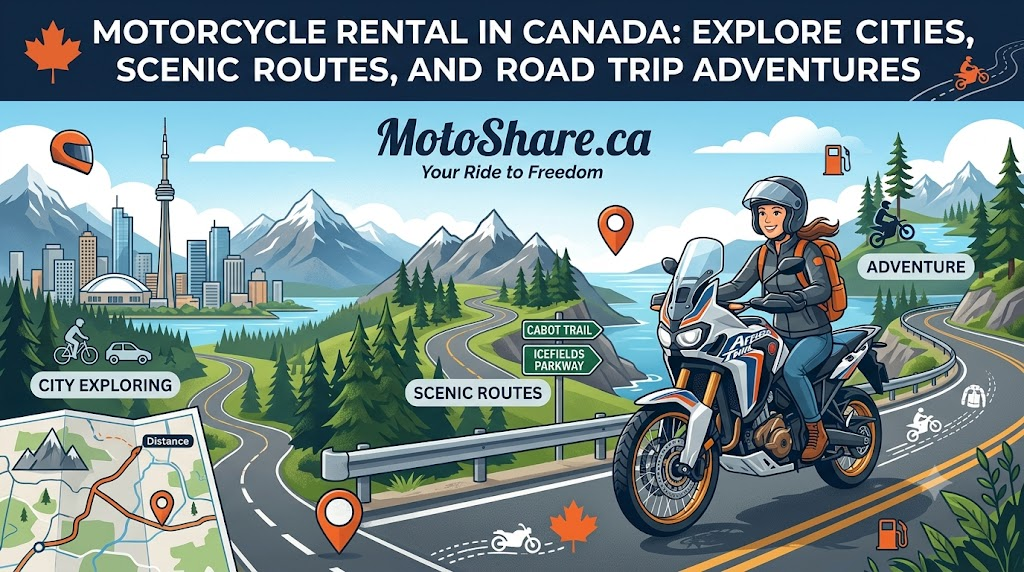
Canada offers some of the most dramatic landscapes on earth, from Atlantic coastal coves and dense boreal forests to jagged alpine passes and sweeping prairie skies. Experiencing these immense expanses on two wheels provides an immediacy that no enclosed vehicle can replicate. You smell the pine after a sudden mountain shower, feel rapid temperature drops as elevation climbs, and interact directly with the topography. For many riders, arranging a motorcycle rental in Canada is the most practical way to turn these dream journeys into reality without the logistical hurdle of transporting a personal machine across provinces or international borders.
When mapping out an itinerary, finding an appropriate platform or provider is just as critical as choosing your route. Exploring resources like MotoShare.ca allows travelers to evaluate available rental opportunities, understand what options exist in different markets, and determine how best to match their riding ambitions with local equipment. Whether you want to navigate urban centers, explore rolling wine regions, or tackle multi-day cross-country corridors, choosing a machine that matches your skill level, physical comfort, and budget establishes the foundation for a safe and memorable ride.
Why Consider Motorcycle Rental in Canada?
Renting rather than shipping or trailering a motorcycle provides distinct operational advantages. Canada spans six time zones and thousands of kilometers. For visitors arriving from overseas, residents living in dense metropolitan cores without dedicated garage storage, or riders based in eastern provinces who want to ride the Rocky Mountains, renting on-site saves days of monotonous transit riding.
A well-planned rental unlocks:
- Geographic Flexibility: Fly directly into an arrival hub, pick up a machine, and begin riding within hours rather than spending a week commuting across transit corridors.
- Tailored Equipment: Select a bike specifically configured for the intended terrain—a nimble mid-displacement standard for urban day trips or a touring machine fitted with hard luggage for extended provincial travel.
- Freedom for Non-Owners: Riders who do not currently own a bike or who are returning to riding can experience scenic regions without the ongoing overhead of year-round ownership, storage, and winterization.
- Exploration of Varied Riding Styles: It serves as a real-world evaluation platform for riders considering purchasing a different category of motorcycle in the future.
While the appeal of the open road is undeniable, practical trip planning demands an honest assessment of transportation modes. Touring by motorcycle requires total physical involvement and constant situational awareness. For families traveling together, groups carrying oversized camping gear, or itineraries scheduled during unpredictable transitional seasons, booking a conventional car rental in Canada may serve practical travel needs more effectively. A solo rider or riding duo, however, will find that a motorcycle creates an intimate connection with the Canadian landscape that four wheels simply cannot provide.
Motorcycle Rental in Toronto: Exploring Ontario
Toronto serves as the primary travel gateway for eastern and central Canada. While downtown Toronto is characterized by dense traffic on multi-lane arteries like the Gardiner Expressway and Highway 401, securing a motorcycle rental in Toronto opens immediate access to Ontario’s historic counties, freshwater coastlines, and lake country.
When planning rides out of the Greater Toronto Area, time your departure carefully. Exiting the core during morning or afternoon commute windows can drain energy before reaching scenic roads. Plan to depart early on weekend mornings or counter to commuter flows.
Recommended Regional Directional Corridors
- The Niagara Escarpment & Forks of the Credit: Northwest of the city, regional roads wind through conservation areas and rolling hills, offering technical riding at moderate speeds.
- Prince Edward County & Lake Ontario Shoreline: Heading east along rural secondary highways brings riders to historic lakeside towns, farmlands, and calm coastal views.
- Muskoka and the Haliburton Highlands: A two- to three-hour ride north leads into the Canadian Shield, characterized by exposed granite outcroppings, winding two-lane pavement, and deep evergreen forests.
Practical Considerations for Ontario Riding
- Highway Tolls: Highway 407 ETR is an electronically tolled highway bypassing Toronto. Cameras scan rear license plates automatically. Check how your rental provider handles automated toll billing to avoid unexpected administrative fees later.
- Parking and Lane Etiquette: In Ontario, lane splitting and lane filtering are illegal. Riders must occupy a full lane position. Downtown Toronto features designated street parking areas for motorcycles, but municipal regulations change seasonally, so always read curb signage.
- Alternative Mobility: If you are visiting Toronto with non-riding companions or expect substantial rainfall, arranging a car rental Toronto pickup for specific legs of your trip might prove more practical than keeping multiple bikes parked during downtown museum visits.
Motorcycle Rental in Vancouver: Coastal and Mountain Adventures
Few places on earth contrast maritime coastlines and alpine peaks as sharply as Southwestern British Columbia. Securing a motorcycle rental in Vancouver allows you to experience coastal inlets and high-elevation passes within a single afternoon of riding.
The premier route from the city is the Sea to Sky Highway (Highway 99), connecting Vancouver through Squamish to Whistler and Pemberton. The roadway hugs the cliffs of Howe Sound before ascending into the Coast Mountains. While thoroughly paved and engineered with sweeping corners, this route demands disciplined riding: police enforcement is active, and sudden maritime fog or mountain showers can drop pavement grip quickly.
       [ Vancouver ]
             │ (Howe Sound Coastal Views)
             ▼
        [ Squamish ]
             │ (Ascending Elevation)
             ▼
        [ Whistler ]
             │ (Technical Alpine Passes)
             ▼
       [ Pemberton ]
Navigating Weather and Geography in British Columbia
- Microclimates: A dry 22°C afternoon in downtown Vancouver can quickly transform into a wet 9°C descent near mountain summits. Packing modular, waterproof riding gear and thermal layers is mandatory, even in midsummer.
- Ferry Logistics: Exploring Vancouver Island or the Sunshine Coast requires BC Ferries transit. Motorcycles board via dedicated staging lanes and are typically loaded first or wedged along bulkhead walls. Bring soft tie-down straps or wheel blocks if you prefer added stability beyond the ropes provided by deckhands.
- Seasonal Conditions: Coastal BC enjoys the longest riding season in Canada, but mountain passes outside the immediate valley—such as the Coquihalla Highway (Highway 5) or Highway 3—enforce winter tire mandates from October 1 through April 30. Standard motorcycle tires do not meet these legal requirements during these months, so plan around seasonal restrictions.
Motorcycle Rental in Calgary: A Gateway to Alberta Adventures
Calgary sits right where the rolling foothills of southern Alberta rise toward the front ranges of the Canadian Rocky Mountains. Choosing a motorcycle rental Calgary pickup places riders within ninety minutes of world-famous alpine corridors like Kananaskis Country, Banff National Park, and the Icefields Parkway.
Elevation, Distances, and Fuel Planning
Alberta riding introduces large open expanses and significant elevation changes. Highway 40 through Highwood Pass reaches 2,206 meters above sea level—the highest paved pass in Canada. At this altitude:
- Engine power can drop slightly on naturally aspirated motorcycles.
- Morning temperatures frequently dip near freezing, even in July and August.
- Fuel stops become spaced farther apart once you depart major corridors like the Trans-Canada Highway (Highway 1). Always calculate fuel range conservatively; mountain headwinds can increase fuel consumption substantially.
Wildlife awareness is paramount throughout Alberta. Elk, bighorn sheep, deer, and bears regularly wander onto paved shoulders. Avoid riding at dawn and dusk when animal movement peaks and low sun angles compromise visibility.
How to Find Motorcycle Rental Near Me
When searching for motorcycle rental near me, finding a suitable provider involves more than picking the closest pin on a map. Because fleet availability, licensing rules, and machine types vary widely, systematically evaluate prospective options before booking.
┌────────────────────────────────────────────────────────┐
│               RENTAL EVALUATION CHECKLIST              │
├────────────────────────────────────────────────────────┤
│  Proximity to transport hubs or lodging             │
│  Displacement/seat height appropriate for skill     │
│  Daily vs. weekly rate structures                   │
│  Security deposit amounts and accepted card types   │
│  Deductible details and liability inclusions        │
│  Daily mileage caps vs. unlimited mileage terms     │
│  Weather cancellation or rescheduling policies      │
│  M2/Class 6 or International Permit prerequisites   │
│  Customer feedback regarding mechanical maintenance │
└────────────────────────────────────────────────────────┘
Always speak directly with the provider or review their terms thoroughly. Confirm operational hours, luggage storage options for your transit bags while you are on the road, and specific policies regarding border crossings if you plan to enter adjacent provinces or territories.
How to Rent a Motorcycle in Canada: A Step-by-Step Guide
Securing a two-wheeled machine requires distinct preparations that differ from hiring a passenger car. Following an orderly sequence prevents unexpected delays at the counter:
- Define Destination and Seasonality: Establish travel dates that align with favorable regional riding weather. In most of Canada, June through September provides the most predictable riding conditions.
- Determine Your Riding Objective: Decide whether the trip centers on relaxed urban cruising, technical mountain twisties, or gravel-surfaced backroads.
- Choose an Appropriate Motorcycle: Select a machine with ergonomic dimensions, seat height, and engine characteristics that you can comfortably manage when fully loaded with gear.
- Audit Total Rental Expenditures: Factor in the base daily rate, local sales taxes (HST/GST/PST depending on the province), supplemental insurance options, gear rentals, and potential security holds on your credit card.
- Verify Licensing Eligibility: Confirm that your home driver’s license carries a valid, unrestricted motorcycle endorsement. Graduated licensing stages or learner permits are almost universally excluded by commercial rental policies.
- Evaluate Insurance Coverage and Financial Exposure: Read the fine print on collision damage waivers, comprehensive protection, third-party liability limits, and the exact deductible amount for which you remain responsible.
- Conduct a Pre-Departure Mechanical Inspection: Examine tire tread depth, cold tire pressures, fluid leaks, drive chain or belt tension, clutch engagement, and all lighting elements alongside the rental representative. Take date-stamped photos of all body panels.
- Clarify Support Protocols: Document the provider’s emergency telephone numbers, after-hours contact channels, and the roadside assistance dispatch procedure.
- Build a Conservative Travel Itinerary: Outline daily distances that allow for weather delays, fuel stops, meal breaks, and scenic pauses without forcing late-night riding.
- Execute Return Protocols: Return the motorcycle on time, washed if stipulated by the agreement, with the fuel tank filled according to the contract, and complete a joint sign-off inspection.
Understanding how to rent a motorcycle in Canada systematically prevents surprises, ensuring your trip is shaped by great roads rather than contractual misunderstandings.
Adventure Motorcycle Rental in Canada: Prepare for the Open Road
The sheer scale of unpaved forest service roads, resource roads, and northern transit highways makes adventure motorcycle rental Canada an increasingly popular category. Dual-sport and adventure-touring motorcycles feature long-travel suspension, upright seating ergonomics, and larger fuel tanks, making them versatile companions for rugged travel.
| Adventure Riding Factor | Planning Best Practice |
| Terrain Reality | Distinguish between maintained crushed-gravel roads and unmaintained trails. Most rental agreements strictly prohibit single-track trails and off-road trail riding. |
| Tire Selection | Ensure the motorcycle is fitted with tires appropriate for the route: 80/20 road-biased tires for paved touring with occasional gravel, or 50/50 dual-purpose tires for extended unpaved sectors. |
| Remote Services | Forest service routes rarely offer mobile phone service. Carry an offline satellite messenger or GPS tracker with active SOS capabilities. |
| Weight Distribution | Keep heavy tools and fluids low in the panniers; overpacking a top box alters center of gravity and handling stability on loose surfaces. |
| Environmental Care | Respect provincial Crown land access rules, fire bans during dry summer months, and stay on established routes to preserve sensitive alpine habitats. |
An adventure-styled bike does not grant immunity from mechanical limits or physics. Loose gravel demands smooth brake application, controlled throttle inputs, and realistic speed management.
Motorcycle Road Trip Canada: Routes, Preparation, and Safety
Executing a memorable motorcycle road trip Canada requires striking a balance between ambitious routing and physical endurance. Riding six to eight hours a day on a motorcycle creates far more physical fatigue from wind buffeting and road vibration than driving a car.
Sample 4-Day Route Model: The Canadian Rockies Explorer
To see how an itinerary comes together, consider this realistic multi-day mountain route:
[Day 1: Calgary to Banff / Lake Louise]
 ~180 km | Smooth highway ascent | Acquire national park vehicle passes

[Day 2: Lake Louise to Jasper via Icefields Parkway]
 ~230 km | Pure alpine riding | Pre-plan fuel at Saskatchewan River Crossing

[Day 3: Jasper to Kamloops via Yellowhead Highway]
 ~440 km | Descending through transition valleys | Mount Robson views

[Day 4: Kamloops to Vancouver via Fraser Canyon]
 ~350 km | Historic canyon roads | Merge back into lower mainland traffic
Essential Safety Practices
- Layering Systems: Adopt a three-layer apparel system: a moisture-wicking base layer, an insulating mid-layer (fleece or heated vest), and a windproof/waterproof protective outer shell with integrated armor.
- Daily Pre-Ride Checklist (T-CLOCS): Check Tires, Controls, Lights, Oil/Fluids, Chassis, and Stands every morning before turning the ignition key.
- Hydration and Caloric Intake: Wind movement strips moisture from your body without noticeable sweat accumulation. Drink water at every fuel stop to maintain mental sharpness.
Motorcycle Rental vs. Car Rental in Canada
When finalizing your travel plans, carefully weigh the pros and cons of two wheels versus four. A balanced comparison highlights the trade-offs:
| Factor | Motorcycle Rental | Car Rental |
| Best suited for | Solo riders, pairs, and riding enthusiasts seeking sensory travel | Families, travel groups, and passengers needing comfort |
| Luggage capacity | Strictly limited to panniers, top boxes, or strapped dry bags | Generous trunk and passenger compartment space |
| Weather protection | Exposed to cold, rain, crosswinds, and sudden hail | Fully enclosed climate control and shelter |
| Parking considerations | Compact footprint; depends on local municipal curbside rules | Standard vehicle stalls; subject to urban parking rates |
| Riding/driving requirements | Requires Class 6/M-level motorcycle license and dedicated gear | Standard Class 5/G driver’s license universally accepted |
| Travel planning | Demands rigorous gear prep, rest breaks, and weather monitoring | Adaptable to adverse weather without major schedule shifts |
Neither option is universally superior. If you are crossing the Rockies during late autumn or traveling with small children, booking a standard car rental Canada makes logical sense. For an individual rider pursuing personal adventure in the heart of summer, the motorcycle is unmatched.
How MotoShare.ca Fits into Your Canadian Travel Planning
Planning a motorcycle tour across Canada involves balancing logistical details: locating available machines, comparing models, confirming pricing, and reviewing local rental conditions. This is where researching platforms like MotoShare.ca can help streamline your preliminary trip planning.
When evaluating any mobility or rental platform, focus on these practical considerations:
- Inventory Verification: Review what motorcycle models or vehicle styles are available in your target destination, ensuring the machine’s seat height, engine size, and luggage setup match your itinerary.
- Transparent Cost Structures: Look past baseline daily rates. Verify mandatory platform fees, regional taxes, mandatory cleaning fees, and security deposit holds that will be placed on your payment card.
- Terms and Exclusions: Carefully examine eligibility criteria. What are the minimum rider age limits? How many years of licensed riding history are required? Are there restrictions on crossing provincial borders or riding on gravel roads?
- Pickup and Drop-Off Logistics: Determine whether pickup points are located near major international airports, downtown cores, or suburban depots, and confirm the specific return procedures.
Using MotoShare.ca as an informative reference allows you to understand the local rental landscape before committing to non-refundable flight bookings or hotel reservations. Taking the time to research thoroughly ensures you embark on your Canadian journey with confidence in your equipment and rental terms.
Common Mistakes to Avoid When Renting a Motorcycle
Even seasoned riders can encounter preventable issues when renting away from home. Being aware of these pitfalls keeps your trip running smoothly:
- Overestimating Daily Mileage: Planning 600-kilometer days on winding secondary roads leaves zero time for scenic overlooks and leads directly to rider fatigue. Keep mountain riding days under 350 kilometers.
- Booking an Unfamiliar Size or Weight Category: If you ride a 300cc standard at home, renting an 850-pound luxury touring bike with a passenger can quickly become overwhelming at slow speeds or in sloped gravel parking lots.
- Assuming Car Insurance Covers Motorcycles: Most consumer credit cards that provide collision coverage for passenger vehicles explicitly exclude two-wheeled motor vehicles. Never assume coverage exists without written confirmation from your provider.
- Ignoring Municipal Speed Enforcements: Speed limits drop quickly when entering small towns across Ontario, BC, and Alberta. Photo radar and laser speed traps are common on rural connector roads.
- Forgetting Clear and Tinted Visors: Riding through unlit mountain corridors or remote valleys after sunset with a dark smoke visor is dangerous. Carry a clear visor or clear eyewear for late-day riding.
Practical Motorcycle Rental Checklist
Review this checklist before taking the keys and heading out on the road:
- Primary motorcycle license, passport, and secondary identification in hand.
- Primary credit card with sufficient available limit for rental hold and deposit.
- Rental contract terms, daily mileage limits, and boundary restrictions understood.
- Written confirmation of insurance deductibles and collision liability limits.
- Hands-on vehicle check completed: tires, chain, brakes, signals, and fluid levels.
- Baseline photographs taken of existing cosmetic blemishes, scratches, or wear.
- Helmet (DOT/ECE approved), armored jacket, gloves, pants, and riding boots fitted.
- Local emergency phone numbers, rental support contacts, and roadside assistance saved.
- Offline mapping data downloaded to smartphone or GPS unit.
- Seven-day weather forecast reviewed along the entire travel route.
Frequently Asked Questions About Motorcycle Rental in Canada
1. How can I rent a motorcycle in Canada?
You can reserve a motorcycle through commercial rental agencies or digital rental platforms. You will need to select your location, confirm your travel dates, present a valid motorcycle license, provide a major credit card for the rental fee and security deposit, and sign a formal rental agreement outlining insurance terms and operational limits.
2. What license do I need to rent a motorcycle in Canada?
You must present a full, unrestricted motorcycle license from your home province, state, or country (such as a Class 6 in Alberta/BC, a Class M in Ontario, or equivalent foreign endorsement). Graduated licensing permits, such as an Ontario M1 or M2, are generally not accepted by rental providers.
3. Can visitors rent a motorcycle in Canada?
Yes. International travelers can rent motorcycles provided they hold a valid motorcycle license issued by their home country. If your license is not printed in English or French, you should also carry an International Driving Permit (IDP) alongside your original home license.
4. Where can I look for motorcycle rental in Toronto?
Riders exploring Ontario can look for rental facilities located in the Greater Toronto Area, near Pearson International Airport (YYZ), or through peer-to-peer and digital vehicle rental platforms operating in the region.
5. Is motorcycle rental available in Vancouver and Calgary?
Yes, seasonal motorcycle rentals operate in both Vancouver and Calgary, typically running from late spring through early autumn. Because summer demand in these mountain gateways is high, reserve your motorcycle several months in advance.
6. What should I check before booking an adventure motorcycle?
Verify the exact tire setup, whether lockable luggage is included, whether unpaved public gravel roads are permitted under the contract terms, and the maximum daily mileage limits. Ensure you are comfortable with the bike’s seat height when fully loaded.
7. Is motorcycle rental better than car rental for a Canadian road trip?
It depends entirely on your travel priorities. A motorcycle provides an unmatched sensory connection to the scenery and is ideal for solo travelers or pairs riding during warm-weather months. A car offers superior protection from inclement weather, ample luggage space, and comfortably accommodates groups and families.
8. How can I find motorcycle rental near me?
Use map services and digital platforms to search for local fleet providers and specialty agencies. Review customer ratings, inspect fleet maintenance standards, confirm licensing conditions, and call the provider directly to verify that the bike you want is available on your chosen dates.
Final Thoughts
Riding across Canada on two wheels is an exceptional travel experience. From the quiet shores of Ontario’s lake country to the winding mountain passes of British Columbia and Alberta, the country’s vast highway network rewards riders who bring patience, proper preparation, and respect for changing weather.
Securing the right rental machine sets the foundation for your journey. Take the time to research available options through platforms such as MotoShare.ca, read your rental agreements thoroughly, double-check your licensing and insurance arrangements, and pack versatile riding gear designed for shifting temperatures. By focusing on safety and practical preparation, you will be free to focus on what matters most: enjoying every curve, summit, and stretch of open road across Canada.
