MOTOSHARE ๐Ÿš—๐Ÿ๏ธ
Turning Idle Vehicles into Shared Rides & Earnings

From Idle to Income. From Parked to Purpose.
Earn by Sharing, Ride by Renting.
Where Owners Earn, Riders Move.
Owners Earn. Riders Move. Motoshare Connects.

With Motoshare, every parked vehicle finds a purpose. Owners earn. Renters ride.
๐Ÿš€ Everyone wins.

Start Your Journey with Motoshare

Laravel: Removing extra tags in Content

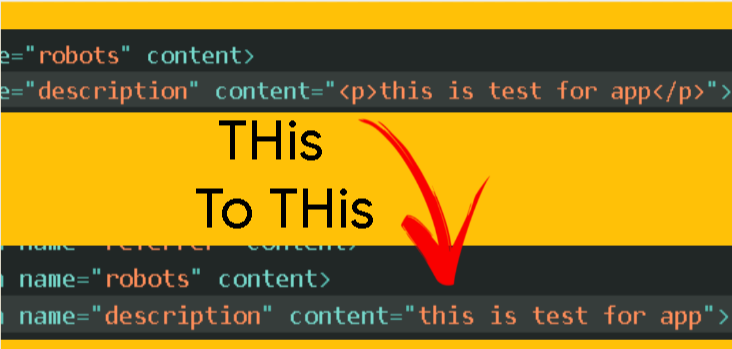
user-generated content often involves managing and sanitizing input data to ensure security and maintain data integrity. One common task is stripping HTML and PHP tags from text inputs to prevent cross-site scripting (XSS) attacks and maintain clean presentation of content. PHP provides a built-in function called strip_tags() for this purpose. This article will explore the strip_tags() function, its usage, and best practices.
What is strip_tags()?

The strip_tags() function in PHP is used to remove HTML and PHP tags from a given string. It takes two parameters: the input string and an optional second parameter specifying allowed tags that should not be stripped.

Basic Usage:

$clean_text = strip_tags($html_content);

Example:

$html_content = "<p>Hello <strong>world</strong>!</p>";
$clean_text = strip_tags($html_content);
echo $clean_text; // Output: Hello world!

Removing Specific Tags:

You can specify allowed tags as the second parameter to strip_tags(), allowing certain tags to remain in the sanitized text.

Example:

$html_content = "<p>Hello <strong>world</strong>!</p>";
$clean_text = strip_tags($html_content, '<strong>');
echo $clean_text; // Output: Hello <strong>world</strong>!

Why Use strip_tags()?

Preventing XSS Attacks: Stripping tags helps prevent malicious users from injecting harmful scripts into your web application, protecting against XSS vulnerabilities.
Clean Text Output: When displaying user-generated content, removing HTML tags ensures a clean and consistent presentation, enhancing readability and aesthetics.


Best Practices:

Use with Caution: While strip_tags() is useful, it’s not foolproof. Always validate and sanitize user inputs using additional measures such as input validation and output encoding.
Consider Context: Understand the context in which the sanitized text will be used. Different contexts may require different approaches to sanitization.
Specify Allowed Tags: When using strip_tags(), consider specifying allowed tags to retain necessary formatting while removing potentially harmful ones.
Test Thoroughly: Test your sanitization methods thoroughly to ensure they effectively remove unwanted content without altering the intended text.

Related Posts

The Definitive Guide to DevOps Myths and Real-World Implementation

Introduction After navigating two decades of IT transformations, I have learned that the greatest barrier to operational success is not a lack of sophisticated tooling, but the…

Read More

Stock Market Education Guide for Beginners to Learn Investing Safely

Introduction Financial literacy has become an important life skill for anyone who wants to manage money better, build long-term wealth, and understand how financial markets work. Many…

Read More

Centralizing Digital Strategy: The Shift to All-in-One Marketing Platforms

The landscape of digital marketing has shifted significantly over the past decade. What was once a collection of siloed channelsโ€”search engine optimization, influencer outreach, content creation, and…

Read More

The Future of IT Operations: Mastering AIOps, MLOps, and Platform Engineering

Modern enterprises are no longer defined solely by their products, but by the efficiency and speed of their engineering organizations. As organizations attempt to move away from…

Read More

Enterprise DevOps Strategy: Scaling Engineering Teams through Expert Training and Consulting

The modern enterprise software landscape is defined by the tension between velocity and stability. Organizations are under constant pressure to deliver features faster, yet they are simultaneously…

Read More

Accelerating Software Delivery with DevOps Best Practices and Automation

Introduction The global software landscape operates in an ecosystem defined by rapid innovation, where traditional, siloed engineering models create friction, manual configuration errors, and extended release cycles…

Read More
0 0 votes
Article Rating
Subscribe
Notify of
guest
0 Comments
Oldest
Newest Most Voted
Inline Feedbacks
View all comments
0
Would love your thoughts, please comment.x
()
x