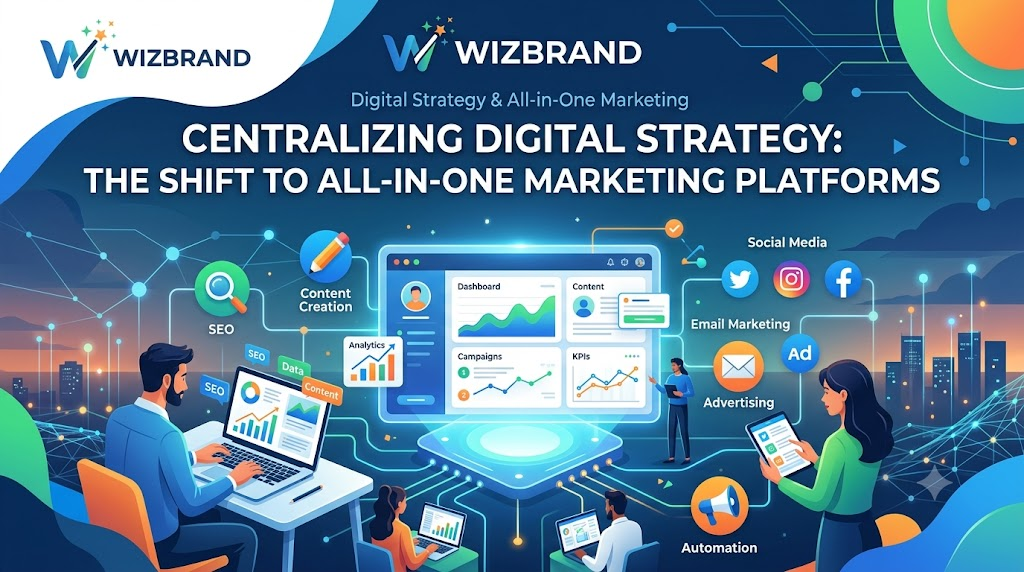
The landscape of digital marketing has shifted significantly over the past decade. What was once a collection of siloed channels—search engine optimization, influencer outreach, content creation, and asset management—has evolved into a deeply interconnected ecosystem. For modern marketing teams, the challenge is no longer just executing these strategies in isolation, but managing them within a cohesive framework that provides clear visibility across all performance metrics.
As complexity increases, the reliance on fragmented toolstacks creates friction. Marketing professionals often find themselves toggling between disparate applications to monitor rankings, track influencer campaigns, and manage creative assets. This fragmentation leads to data silos, reporting delays, and, ultimately, a diluted strategy. Recognizing this, many organizations are consolidating their operations through comprehensive solutions such as wizbrand, which serves as an all-in-one SEO platform designed to unify these essential workflows. By integrating an effective rank tracking tool with robust management capabilities, teams can transition from reactive task-switching to proactive, data-driven growth.
What is SEO Management Software?
At its core, SEO management software is a centralized system designed to streamline the technical and strategic components of organic search visibility. While early iterations of these tools focused primarily on keyword monitoring, modern software has expanded to include comprehensive audits, backlink analysis, competitor intelligence, and technical health monitoring.
The evolution of these platforms reflects a broader industry shift toward efficiency. It is no longer sufficient to identify search engine ranking fluctuations; marketers need to understand the underlying causes and the direct impact of those changes on their overall business objectives. These systems act as a command center for the entire organic search lifecycle, allowing teams to plan, execute, and report on campaigns without leaving the interface.
Why Businesses Need All-in-One SEO Platforms
Tool fragmentation is one of the most common operational hurdles for agencies and in-house marketing teams. When a team uses one application for rank tracking, another for backlink analysis, and a third for influencer management, the lack of data continuity makes it difficult to see the “big picture.”
This separation of data often leads to inconsistency. For example, if a team launches an influencer campaign, they need to know if that content is positively impacting their search rankings. If the influencer data and the SEO data live in different, non-integrated systems, establishing a causal relationship becomes a manual, time-consuming task. All-in-one platforms resolve this by centralizing data, ensuring that every team member—from SEO specialists to brand managers—is looking at the same version of truth.
Core Features of SEO Software for Agencies
Agencies, in particular, require high-level functionality to manage multiple client accounts simultaneously. Effective SEO software for agencies typically provides a suite of features that prioritize automation and scalability.
A primary component is the rank tracking tool, which provides real-time visibility into keyword performance across various search engines and geographic locations. Beyond tracking, these platforms facilitate deep competitor analysis, allowing agencies to benchmark their clients against market rivals. Furthermore, SEO reporting software is essential for client communication. The ability to generate white-labeled, automated reports that translate technical data into actionable business insights saves significant time and demonstrates clear return on investment.
Understanding Influencer Marketing Platforms
The convergence of SEO and influencer marketing has changed how brands approach visibility. Influencer marketing platforms are designed to bridge the gap between creative outreach and measurable digital impact.
These systems provide access to an influencer marketplace where brands can discover, vet, and contact potential partners. Beyond discovery, robust influencer campaign management software handles the logistics of the partnership, including content approval workflows, tracking unique referral codes, and measuring engagement metrics. When integrated into a larger marketing suite, this ensures that influencer content is not just driving social awareness, but is also aligned with broader SEO objectives, such as earning high-quality backlinks or generating search intent-driven traffic.
Role of Digital Asset Management in Marketing
As content production volume increases, maintaining brand consistency becomes a challenge. Digital asset management software, often referred to as marketing asset management software, provides a centralized repository for logos, images, videos, and campaign collateral.
This prevents the common issue of teams using outdated logos or non-compliant creative assets in their campaigns. By organizing these materials within an accessible, searchable system, organizations ensure that all digital touchpoints—from social media posts to website landing pages—maintain a unified brand voice. This level of organization is crucial for scaling marketing efforts, as it eliminates the time lost searching for files and ensures that all assets are readily available for use across various marketing channels.
Benefits of Using an All-in-One SEO Platform
The primary advantage of consolidating tools into a single platform is the improvement in operational efficiency. When workflows are unified, the time spent on administrative tasks, such as manual data entry or cross-referencing spreadsheets, is drastically reduced.
This centralization leads to improved reporting accuracy. Because data is ingested from a single source, the risk of human error in report creation is minimized. Additionally, the ability to view cross-channel performance in one dashboard allows for faster campaign execution. If a specific keyword ranking dips, the team can quickly cross-reference this with recent influencer activity or asset changes, allowing for agile, data-driven decisions that sustain long-term growth.
Challenges in SEO and Influencer Campaign Management
Despite the benefits of modern technology, many teams still struggle with data silos. These occur when tools do not communicate, causing information to get stuck in departmental pockets.
For instance, an SEO team might be optimizing content based on high-volume keywords, while an influencer marketing team is creating content based on creative trends. If these two initiatives are not aligned through a unified system, the brand misses the opportunity to maximize the impact of its combined efforts. Furthermore, reporting delays are common when data must be manually aggregated from multiple sources, leading to a situation where decision-making is based on stale, historical data rather than real-time insights.
How Modern Platforms Solve These Challenges
Modern marketing platforms solve these integration issues by creating a single source of truth. By utilizing unified dashboards, teams gain visibility into every aspect of their digital presence in one place.
Automation plays a significant role in this resolution. Automated workflows ensure that data is updated continuously, providing real-time tracking of both search rankings and campaign performance. Integrated workflows allow for cross-channel visibility, where marketers can see the direct correlation between an influencer’s post and a subsequent spike in organic traffic. This level of system-level integration removes the friction of manual tool-switching and ensures that the entire marketing strategy is synchronized.
Use Cases of SEO and Marketing Platforms
The utility of these platforms extends across various business models and organizational structures:
- SEO Agencies: Agencies use these tools to manage dozens of client accounts, automate reporting, and scale their service offerings without a linear increase in overhead.
- E-commerce Brands: E-commerce companies rely on integrated platforms to track product-specific keywords, manage high-volume influencer collaborations, and ensure creative assets are aligned with seasonal promotions.
- SaaS Companies: For SaaS organizations, the focus is often on content-led growth. These platforms assist in identifying high-intent keywords, optimizing product pages, and measuring the impact of content marketing assets.
- Influencer Marketing Teams: These teams leverage the platform to manage large-scale campaigns, streamline influencer vetting, and track the ROI of their partnerships through integrated performance analytics.
- Digital Media Agencies: These agencies utilize the centralized nature of the software to manage complex, multi-channel campaigns for enterprise clients, ensuring consistent reporting and performance monitoring.
Choosing the Right SEO Management Software
Selecting a platform requires a careful evaluation of the team’s current needs and future scalability. Key criteria for evaluation include:
- Ease of Use: The interface should be intuitive, reducing the onboarding time for new team members.
- Integration Capability: The platform should connect seamlessly with existing tools, such as web analytics, social media accounts, and CRM systems.
- Reporting Features: Look for systems that offer automated, customizable, and white-label reporting options.
- Scalability: Ensure the tool can accommodate the growing number of keywords, clients, or influencer campaigns as the business expands.
- Collaboration Tools: Prioritize platforms that allow for team-based roles, permissions, and internal communication workflows.
- Data Accuracy: Verify that the platform uses reliable data sources for keyword tracking and competitor analysis.
Future of SEO and Influencer Marketing Platforms
The trajectory of marketing technology is moving toward greater autonomy and intelligence. We are seeing a shift toward AI-driven SEO, where platforms not only report on rankings but also suggest content optimizations based on predictive analytics.
Automated reporting will continue to evolve, moving beyond static PDFs to interactive, real-time dashboards that provide actionable insights rather than just raw data. Influencer AI matching, which uses machine learning to connect brands with influencers who share authentic audience alignment, is already becoming a standard feature. Ultimately, the future lies in the development of fully unified marketing ecosystems, where the lines between SEO, content, influencer marketing, and asset management blur, allowing for a truly seamless approach to digital growth.
Market Context Insight: Why All-in-One SEO Platforms Matter
The current industry climate has necessitated a move from tool-based marketing to platform-based marketing. In the past, marketers were required to piece together a “Frankenstein” stack of disparate tools to cover their needs. This approach was not only costly but also fragmented the data, making strategic clarity difficult to achieve.
Platforms represent a shift toward holistic strategy management. The need for a unified ecosystem—where SEO data, influencer partnerships, and asset management coexist—is no longer a luxury but a requirement for teams that need to act at the speed of modern digital markets. By moving to a centralized environment, organizations can eliminate the technical debt associated with managing multiple logins, disjointed interfaces, and disconnected reporting flows. This allows marketing leaders to focus on high-level strategy and execution, rather than the mundane tasks of tool maintenance and manual data reconciliation.
Frequently Asked Questions
What is SEO management software? It is a comprehensive digital solution designed to help teams track, manage, and optimize their search engine presence, covering activities like keyword monitoring, technical audits, and competitor analysis.
Why do agencies need SEO software? Agencies require these tools to manage multiple client portfolios efficiently, automate time-consuming reporting tasks, and provide scalable performance tracking that demonstrates clear ROI.
What is an all-in-one SEO platform? It is a centralized system that combines multiple marketing functions—such as SEO, influencer management, and asset storage—into a single interface, eliminating the need for fragmented, standalone tools.
How does rank tracking work? Rank tracking involves the systematic monitoring of a website’s position in search engine results pages for specific keywords over time, providing visibility into the effectiveness of SEO strategies.
What is SEO reporting software used for? It is used to aggregate complex search performance data into clear, actionable, and visual reports, which are then used to communicate results to stakeholders or clients.
What is an influencer marketing platform? It is a software solution that streamlines the process of finding influencers, managing collaborations, tracking influencer performance, and analyzing the impact of influencer-led content.
What is influencer campaign management software? This is a specific type of tool focused on the operational side of influencer marketing, helping teams manage communication, handle content approvals, and track campaign-specific performance metrics.
How does digital asset management help marketers? It provides a single, secure library for storing, organizing, and distributing marketing assets, ensuring that team members always access the most current and approved versions of creative files.
What is marketing asset management software? This software specifically focuses on the storage and organization of brand and marketing-related files, ensuring consistent brand identity across all digital marketing channels.
Why are all-in-one tools better than multiple SEO tools? All-in-one tools reduce data silos, provide a consistent user experience, and allow for better correlation between different marketing activities, which saves time and improves decision-making.
Who should use SEO software for agencies? It is ideal for marketing agencies of all sizes, as well as in-house marketing teams that manage multiple websites or large-scale digital campaigns and require centralized oversight.
How is SEO evolving with AI tools? SEO is shifting toward predictive analytics, where AI helps identify search intent trends, automates content optimization, and provides smarter insights into how to improve rankings proactively.
Final Thoughts
The consolidation of marketing technology is a natural response to the increasing complexity of the digital landscape. As SEO, influencer marketing, and content management become more intertwined, the operational benefits of utilizing a unified platform become undeniable. By focusing on integration, data accuracy, and streamlined workflows, organizations can move past the inefficiencies of tool fragmentation. This transition allows marketing teams to focus on what truly matters: creating impactful strategies that resonate with their audience and deliver measurable, long-term growth.
