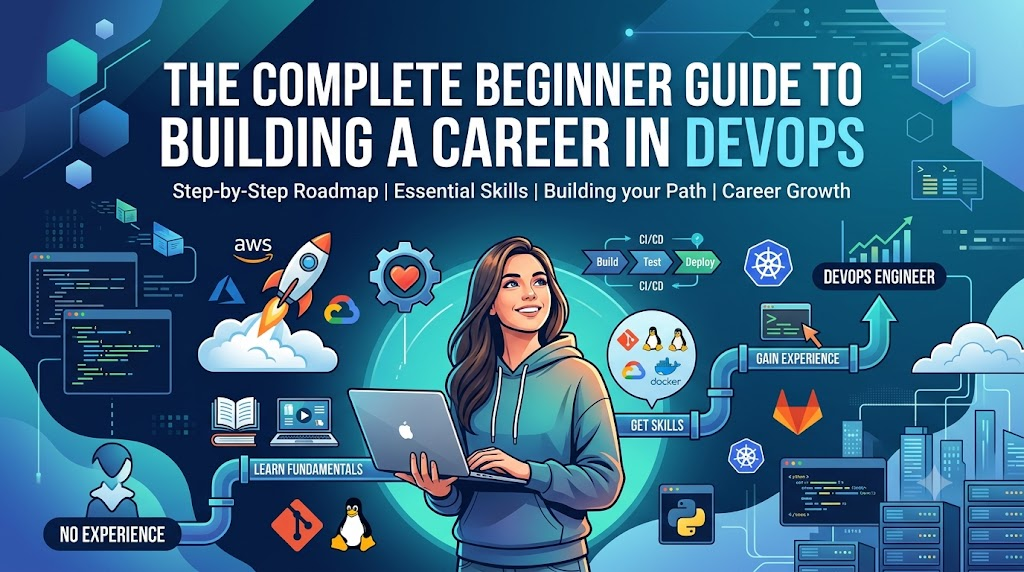
Introduction
DevOps has evolved from a niche set of practices into a fundamental pillar of modern technology, bridging the gap between development and operations to drive faster, more reliable application delivery. For beginners, the path can feel overwhelming due to the vast ecosystem of tools, but success is built not on mastering everything at once, but on developing a strong grasp of fundamentals through consistent, hands-on practice. By following a structured roadmap—such as the resources available through DevOpsSchool—students, career changers, and IT professionals can build the necessary confidence and technical proficiency to transition into this field effectively. By prioritizing practical experience and project-based learning over theoretical memorization, you can develop a sustainable career in a discipline that continues to shape the future of digital infrastructure.
What Is DevOps?
At its core, DevOps is a cultural and professional movement that encourages collaboration between software developers and IT operations teams. Traditionally, these two groups worked in silos, which often caused delays and communication gaps.
DevOps changes this by emphasizing shared responsibility and automation. Key components include:
- Collaboration: Breaking down walls between teams to ensure smoother hand-offs.
- Automation: Using code to perform repetitive tasks, such as provisioning servers or testing code.
- CI/CD: Continuous Integration and Continuous Delivery are practices that allow developers to merge code frequently and deploy it to production automatically.
- Cloud-Native Development: Leveraging cloud services to build scalable and flexible applications.
- Continuous Improvement: A mindset of constantly iterating and refining processes based on feedback.
Why Choose a Career in DevOps?
A career in DevOps offers significant professional advantages for those who enjoy problem-solving and systemic thinking.
- Diverse Opportunities: Every company utilizing cloud infrastructure or software development requires DevOps practices, leading to roles across various industries.
- Continuous Learning: The technology stack evolves rapidly, ensuring that your work remains intellectually stimulating.
- Exposure to Cloud Technologies: You gain deep insights into how massive, distributed systems function.
- Cross-Functional Collaboration: You act as a connector within an organization, working with developers, security teams, and business stakeholders.
- Long-Term Growth: As organizations prioritize digital transformation, the need for individuals who understand automation and infrastructure remains high.
Can You Learn DevOps With No Experience?
Yes, you can start a career in DevOps with no direct experience, but it requires patience and a methodical approach. While previous experience in system administration, QA testing, or software development is a head start, it is not mandatory.
Many successful engineers begin by leveraging transferable skills—such as logical reasoning, command-line usage, or basic programming—and augmenting them with specific DevOps technical training. The key is to move from theoretical study to practical execution as quickly as possible. Building projects is not just about showing off; it is the most effective way to bridge the gap between “knowing” a concept and being able to “apply” it in a real-world scenario.
Step-by-Step DevOps Learning Roadmap
- Computer Basics: Understand how hardware, operating systems, and basic software stacks interact.
- Linux Fundamentals: The backbone of DevOps. Learn file systems, permissions, and bash commands.
- Networking Basics: Understand IP addresses, DNS, HTTP/HTTPS, and how traffic moves across the internet.
- Git & Version Control: Master how to track changes, branch, and merge code using GitHub or GitLab.
- Shell Scripting: Learn to automate file management and system tasks.
- Python (Basic Automation): Learn basic scripting to handle data and automate workflows.
- Docker: Understand containerization and how to package applications.
- CI/CD Fundamentals: Learn how to move code from a developer’s laptop to a server automatically.
- Cloud Platform Basics: Gain familiarity with AWS, Azure, or Google Cloud.
- Terraform & Infrastructure as Code: Learn to provision infrastructure using configuration files.
- Kubernetes: The industry standard for managing containerized applications at scale.
- Monitoring & Logging: Learn tools to track the health of your services.
- DevSecOps Basics: Understand how to integrate security into your pipelines.
- Capstone Projects: Combine everything into a single, functional project.
- Resume & Portfolio: Document your journey.
- Interview Preparation: Practice explaining your process and troubleshooting.
Essential DevOps Skills
| Skill Area | Why It Matters | Beginner Practice Idea |
| Linux | You will spend most of your time here. | Install a Linux distro and manage files using the CLI. |
| Networking | Understanding how data travels is critical for troubleshooting. | Setup a home network and ping between devices. |
| Git | It is the primary tool for collaboration. | Push a personal project to a public GitHub repo. |
| Shell Scripting | Automates repetitive system tasks. | Write a script to backup a folder daily. |
| Python | Essential for advanced automation. | Create a script to call an API. |
| Docker | Standardizes software environments. | Containerize a simple HTML website. |
| Jenkins/CI/CD | Automates the delivery process. | Build a pipeline that tests your code. |
| Cloud (AWS/Azure) | Where your infrastructure lives. | Host a static website on a cloud bucket. |
| Terraform | Manages infrastructure via code. | Provision a virtual machine using code. |
| Kubernetes | Orchestrates containers at scale. | Deploy a multi-container app locally. |
| Monitoring | Vital for system uptime. | Install a simple monitoring agent. |
| Security | Protects your infrastructure. | Secure your cloud bucket permissions. |
Hands-On Projects for Beginners
Projects are the evidence of your competence. Start small:
- Linux Home Lab: Install Linux on a virtual machine and manage users and services.
- Git Management: Maintain a repository of your learning scripts and document every change.
- Dockerizing an App: Take a simple Python or Node.js web app and make it run inside a Docker container.
- CI/CD Pipeline: Create a pipeline that automatically runs tests when you push code to GitHub.
- Cloud Deployment: Deploy a web server to a cloud provider like AWS using a free tier account.
- Terraform Automation: Provision a simple infrastructure resource (like a storage bucket) using a Terraform configuration file.
Building a Strong DevOps Portfolio
A portfolio serves as your professional proof of work. It should include:
- GitHub Repositories: Clean, documented code that shows you can follow best practices.
- Architecture Diagrams: Use tools like Draw.io to visualize your infrastructure setups.
- Technical Blogs: Write about what you learned while completing a project. Explaining a concept is the best way to master it.
- Automation Scripts: Show that you can write clean, efficient scripts to solve problems.
- Learning Journal: A record of your progression, highlighting the challenges you faced and how you overcame them.
Certifications for Beginners
| Certification Category | Best For | Skill Level | Learning Outcome |
| Linux | Foundation building | Beginner | CLI and System Management |
| Cloud | Platform specific skills | Intermediate | Managing Cloud Resources |
| Docker/K8s | Containerization mastery | Intermediate/Advanced | Scaling & Orchestration |
| Terraform | IaC specialization | Intermediate | Automating Infrastructure |
| DevOps Foundations | Broad understanding | Beginner | Core DevOps Concepts |
Certifications provide a structured way to study, but they should always be supported by hands-on practice. The DevOpsSchool ecosystem provides guidance on identifying which certifications align with your current learning stage.
Preparing for Entry-Level DevOps Interviews
Interviewers look for problem-solving ability, not just memorization.
- Linux Commands: Be ready to describe how to check system resources, logs, and process status.
- Networking: Understand the difference between TCP and UDP, and how DNS resolution works.
- Git Workflows: Explain how to resolve a merge conflict.
- Troubleshooting: Practice the “process of elimination” when an application fails to deploy.
- Communication: Be prepared to explain your project architecture clearly. Why did you choose this tool over another?
Measuring Your Learning Progress
| Metric | Why It Matters | Career Benefit |
| Labs Completed | Confirms hands-on ability | Builds technical confidence |
| GitHub Projects | Provides proof of work | Enhances resume value |
| Automation Scripts | Shows efficiency | Demonstrates problem-solving |
| Cloud Deployments | Shows familiarity with production | Practical experience |
| Mock Interviews | Improves clarity of thought | Reduces interview anxiety |
Common Challenges
| Challenge | Impact | Recommended Solution |
| Overwhelmed by tools | Leads to confusion | Focus on one tool at a time. |
| Skipping Linux | Weak foundation | Spend 4 weeks purely on Linux. |
| Inconsistent practice | Slows progress | Set a daily 1-hour learning goal. |
| Fear of failure | Stifles learning | Treat every error as a learning lab. |
Best Practices
- Learn One Concept at a Time: Don’t jump to Kubernetes until you understand Docker.
- Practice Weekly: Consistency beats intensity.
- Build Real Projects: Avoid tutorials that don’t involve coding your own solution.
- Read Documentation: Official docs are the most accurate source of information.
- Participate in Communities: Engage with others learning the same path.
- Review Regularly: Periodically look back at your code to see if you can improve it with new knowledge.
Real-World Example: A Successful Transition
Consider a candidate who started with no IT experience. They spent three months focusing exclusively on Linux and Networking. Once comfortable with the CLI, they moved into Python and Bash scripting. They built a local Docker-based project, documented the setup on GitHub, and then attempted to deploy a simple web application to AWS. By consistently building and documenting these small projects, they developed a portfolio that demonstrated a clear, logical progression. They did not rush; they focused on mastering the foundation, which made learning higher-level tools like Kubernetes much easier.
Common Beginner Mistakes
- Trying to learn every tool at once: Focus on depth before breadth.
- Memorizing commands: Understand the “why,” not just the “how.”
- Ignoring documentation: Never rely solely on third-party tutorials.
- Avoiding troubleshooting: Debugging is where real learning happens.
- Focusing only on certifications: Certs help, but projects get you noticed.
Future of DevOps Careers
The field is shifting toward Platform Engineering and GitOps. Organizations are increasingly looking for engineers who can build internal platforms that make developers more productive. AI-assisted DevOps is also emerging, where automation handles even more complex tasks. Continuous learning will remain the most critical skill for any DevOps engineer.
Practical Beginner Checklist
- Install Linux and master basic CLI navigation.
- Learn the fundamentals of TCP/IP and DNS.
- Create a GitHub account and push your first script.
- Write a shell script to automate a system task.
- Build and run a Docker container.
- Set up a simple CI/CD pipeline using a free-tier tool.
- Deploy a small project to a cloud provider.
- Document every project with an architecture diagram.
- Conduct a mock interview with a peer.
FAQs
- Can I start a DevOps career with no experience?Yes. Many engineers start by learning Linux, networking, and automation scripts before moving into cloud and container tools.
- How long does it take to learn DevOps fundamentals?Typically, 6 to 12 months of consistent study and project building is needed to become entry-level ready.
- Which programming language should I learn first?Python is the industry standard for DevOps automation.
- Do I need cloud knowledge before learning Kubernetes?Yes, having a basic understanding of cloud infrastructure will make learning Kubernetes much more intuitive.
- Which certifications are suitable for beginners?Start with Linux Foundation or AWS Cloud Practitioner certifications.
- How important are GitHub projects?They are essential. They act as your portfolio and proof of hands-on competence.
- Should I learn Linux before Docker?Absolutely. Docker relies on Linux kernel features; understanding Linux is a prerequisite.
- What should I include in my resume?Focus on your projects, technical skills, and the specific problems you solved using automation.
- Do I need a degree to get into DevOps?A degree is helpful but not mandatory. Practical skills and a strong project portfolio are often more important to employers.
- Is DevOps only about tools?No, it is a culture of collaboration and automation. Tools are just a means to achieve these goals.
- How do I choose between AWS, Azure, and GCP?Pick one and learn it well. The fundamental concepts of cloud computing are transferable between them.
- What is the difference between SRE and DevOps?SRE (Site Reliability Engineering) is a specific implementation of DevOps principles focused on system reliability.
- Is DevOps hard to learn?It has a steep learning curve because it combines many disciplines, but it is manageable if you follow a structured path.
- How do I keep up with new DevOps tools?Read tech blogs, follow industry leaders, and subscribe to newsletters related to your specific stack.
- What is the best way to practice for an interview?Build a project, then practice explaining its architecture, the challenges you faced, and how you solved them.
Final Thoughts
Entering the world of DevOps is a journey of continuous improvement. There is no shortcut to mastery, but there is a clear, proven path to building the skills that companies value. Focus on your fundamentals, stay consistent with your practice, and ensure that every tool you learn is applied through a hands-on project. Your goal is not to memorize every command in existence, but to understand how to solve problems efficiently. Keep learning, stay curious, and document your growth.
