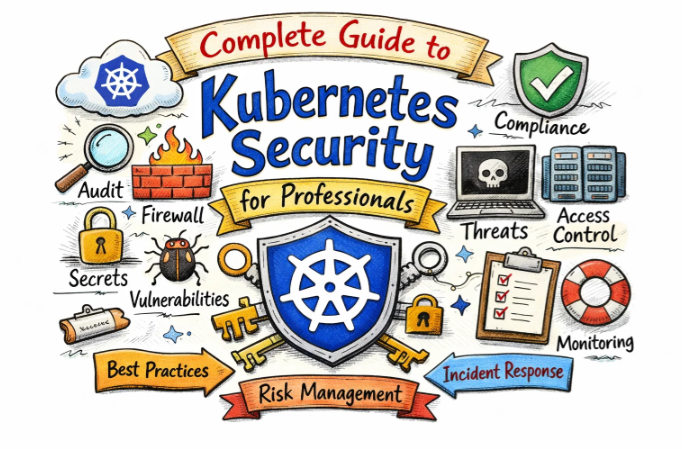
In the world of infrastructure, there is a massive difference between keeping a service running and keeping it safe. For years, we focused on “uptime.” But today, a system that is up but compromised is more dangerous than one that is down. The Certified Kubernetes Security Specialist (CKS) is the industry’s way of separating those who can deploy a cluster from those who can actually defend one.
For software engineers and managers across India and the global tech hubs, the CKS is the cornerstone of the Master in Observability Engineering Certifications Program. It represents a shift from reactive troubleshooting to proactive, built-in security.
The Modern Engineering Certification Roadmap
To understand the CKS, you must see where it fits within the professional growth of a modern engineer. It is the peak of the Kubernetes track, leading directly into master-level observability.
| Track | Level | Who it’s for | Prerequisites | Skills Covered | Recommended Order |
| DevOps | Foundation | All Engineers | Linux Basics | Automation, CI/CD | 1 |
| SRE | Specialist | SREs, Admins | CKA | Reliability, SLIs | 2 |
| Kubernetes | Professional | Admins | Linux Admin | Cluster Management | 3 |
| Security | Expert | Security/DevOps | CKA | CKS, Hardening | 4 |
| DevSecOps | Expert | Leads | CKS | Lifecycle Security | 5 |
| Observability | Master | Architects | CKS/SRE | Full Stack Viz | 6 |
Certified Kubernetes Security Specialist (CKS): The Defensive Blueprint
The CKS is a performance-based challenge. You aren’t answering “A, B, or C.” You are sitting in a live environment, faced with a cluster that has been poorly configured or is currently under threat. Your job is to lock it down without breaking the applications.
What it is
The CKS is an elite certification that validates your ability to secure container-based applications across the entire lifecycle: build, deploy, and runtime. While previous certifications focused on “how to build,” the CKS focuses on “how to protect.” It is widely regarded as one of the most practical and difficult exams in the cloud-native ecosystem.
Who should take it
This is for the hands-on professional. If you are a Software Engineer, an SRE, or a Platform Architect, this is how you prove you can handle production-grade security. It is also essential for Engineering Managers who need to understand the technical constraints of securing a global platform. Note: You must have an active CKA to sit for this exam.
Skills you’ll gain
Preparing for the CKS forces you to look at a cluster through the eyes of an attacker. You move beyond default settings and learn to implement “Hardened by Default” architectures.
- Hardening the Control Plane: You will master the art of securing the “brain” of Kubernetes. This includes auditing API server configurations, encrypting data at rest in etcd, and implementing the principle of least privilege via RBAC.
- Securing the Node and Runtime: You’ll learn to use Linux-native tools like Seccomp and AppArmor to restrict what a container can do to the underlying OS, and tools like Falco to detect suspicious behavior in real-time.
- Network Isolation: You will gain the skills to write complex Network Policies that ensure pods can only talk to exactly what they need to, effectively creating a “micro-perimeter” around every service.
- Supply Chain Integrity: You’ll learn how to ensure that only “good” code makes it to production. This involves automated vulnerability scanning, image signing, and using Admission Controllers to block non-compliant workloads.
Real-world projects you should be able to do after it
The value of the CKS is in the work you can do the Monday after you pass. It translates directly into enterprise-level security projects.
- Automated Security Gatekeeping: You can design a CI/CD pipeline that doesn’t just build code but also audits it. If a developer tries to deploy a container with a known high-severity vulnerability, your system will automatically reject it.
- Real-time Threat Detection: You can set up a cluster-wide monitoring system that flags when a process tries to write to a sensitive file or when an unexpected shell is opened within a container.
- Zero-Trust Network Architecture: You will be able to implement a policy where no pod trusts another by default. You’ll use Network Policies and mTLS to ensure every internal connection is authenticated and authorized.
Preparation Plan
7–14 Days (The Specialist Sprint):
For those already working in DevSecOps roles.
- Phase 1: Focus exclusively on third-party tools (Trivy, Falco, Cosign).
- Phase 2: Practice the manual configuration of Admission Controllers and API server flags.
- Phase 3: Rapid-fire mock exams to master the terminal environment.
30 Days (The Practitioner Path):
- Weeks 1-2: Master the Kubernetes-native security features like RBAC, Secrets, and Network Policies.
- Week 3: Dive into host-level security (AppArmor/Seccomp) and image scanning.
- Week 4: Spend every evening on a different mock exam. Speed is your biggest enemy here.
60 Days (The Foundation Path):
- Month 1: Focus on the “Why.” Read the CIS Benchmarks for Kubernetes. Understand the Linux kernel security concepts that Kubernetes relies on.
- Month 2: Follow the 30-day path, focusing on repetitive practice of the most common exam tasks until they are muscle memory.
Common Mistakes
I have seen many brilliant engineers fail this because they treated it like a regular academic test.
- Documentation Tunnel Vision: You only have access to the official docs. If you haven’t practiced navigating them, you will spend 30 minutes looking for a YAML snippet you should have found in 30 seconds.
- Ignoring the Context: In the exam, you work across multiple clusters. A common mistake is running a command on the “Master” node when you were supposed to be on a “Worker” node. Always check your context.
- Over-Engineering: Don’t try to build the most elegant solution. Build the solution the question asks for. If it asks to block port 80, just block port 80—don’t try to redesign the whole network.
Best Next Certification After CKS
Once you have secured the cluster, your next steps should broaden your impact across the organization:
- Same Track: Certified DevSecOps Professional (CDP) to master the “Shift Left” philosophy.
- Cross-Track: Cloud-Specific Security (AWS/Azure/GCP) to secure the “ground” your cluster sits on.
- Leadership: Master in Observability Engineering. This is the ultimate goal, teaching you how to maintain total visibility and control over complex, secure systems.
Choose Your Path: 6 Learning Tracks
- DevOps Track: Perfect for those who want to automate everything. CKS ensures your automation is safe.
- DevSecOps Track: For those who want to make security a core part of the development culture.
- SRE Track: Focuses on the intersection of security and reliability—because an attacked system is an unstable one.
- AIOps/MLOps Track: For engineers working on AI platforms that need massive scale and airtight container security.
- DataOps Track: Essential for securing the data pipelines that move sensitive customer information through Kubernetes.
- FinOps Track: Helps you understand how security configurations (like pod resource limits) impact the cloud budget.
Role → Recommended Certifications Mapping
| Your Current Role | Phase 1 | Phase 2 | Mastery Level |
| DevOps Engineer | CKA | CKS | DevSecOps Lead |
| SRE | CKA | CKS | Observability Master |
| Platform Engineer | CKA | IaC (Terraform) | CKS |
| Cloud Engineer | Cloud Assoc. | CKA | CKS |
| Security Engineer | CKA | CKS | CISSP |
| Data Engineer | Data Tools | CKA | CKS |
| FinOps Practitioner | FinOps Cert | CKA | Cloud Architect |
| Engineering Manager | CKA | CKS | Leadership Certs |
Top Institutions for CKS Training
Finding the right training partner is the difference between struggling alone and having a clear path to success. Here are the leaders in the field.
DevOpsSchool provides a deeply immersive training experience. Their approach is focused on the “why” behind the security settings, which helps you retain the knowledge long after the exam is over. They are known for high-quality live instruction and excellent lab environments.
Cotocus is highly recommended for engineers who want a “no-nonsense” technical deep dive. Their CKS modules are updated frequently to match the latest exam versions, ensuring you aren’t studying outdated material.
Scmgalaxy offers a massive community-driven platform for learning. Their CKS resources are extensive, including a wealth of practical examples and troubleshooting guides that are perfect for self-paced learners.
BestDevOps focuses on the efficiency of learning. They break down the complex CKS curriculum into bite-sized, manageable pieces, making it an excellent choice for busy professionals who need to study around a full-time job.
Devsecopsschool is the go-to for those who view CKS as just the beginning. Their curriculum places the CKS within the larger context of modern security, preparing you for a long-term career in the security domain.
Sreschool takes a unique angle by looking at security through the lens of system uptime. They teach you how to implement the CKS requirements in a way that doesn’t compromise the performance or reliability of your applications.
Aiopsschool is the right choice if you are looking toward the future of automated defense. They integrate container security basics with advanced monitoring and AI-driven threat detection.
Dataopsschool provides a specialized perspective for those managing data on Kubernetes. They focus on the security domains of the CKS that are most critical for protecting data at rest and in transit.
Finopsschool bridges the gap between the terminal and the spreadsheet. They help you understand how the security choices you make in the CKS affect the overall cost and efficiency of your cloud footprint.
FAQs: CKS Certification and Career
- What makes CKS harder than CKA? The CKA is about the “Happy Path” (how to make things work). CKS is about the “Unsafe Path” (how to stop things from breaking or being stolen).
- When do I get my exam results? You will typically receive an email with your score within 24 hours of completing the test.
- Will this certification help my career in India? Yes. The demand for CKS-certified engineers in India’s top tech firms and global captives is currently outstripping the supply.
- Is CKA a mandatory prerequisite? Yes. You cannot schedule the CKS exam unless you have a valid, non-expired CKA certification.
- What is the format of the exam? It is a 2-hour, hands-on performance exam conducted in a browser-based terminal.
- How long is the CKS valid for? The certification is valid for 2 years.
- What is the passing score for CKS? The passing score is 67%.
- Can I use my own notes during the exam? No. You are strictly limited to the terminal and one allowed tab for official Kubernetes/tool documentation.
- Are the questions multiple choice? No. Every question requires you to perform a task or configuration change in a live cluster.
- Do I get a free retake? If you purchase the exam through the CNCF/Linux Foundation, one free retake is usually included.
- Do I need to be a coder? You don’t need to write application code, but you must be an expert at writing and debugging YAML and basic shell commands.
- Which simulator is best? Killer.sh is the official simulator provider and is highly recommended for realistic practice.
FAQs: Technical Deep Dive
- Which version of K8s is used? The exam usually tracks the current or previous stable release of Kubernetes.
- Is runtime security a big part of the exam? Yes. Expect multiple questions on tools like Falco and monitoring system calls.
- Do I need to know how to install Kubernetes? You should be familiar with
kubeadmas you may need to modify the control plane components. - Is image security covered? Yes. You will be expected to scan images for vulnerabilities and identify “unsafe” Dockerfiles.
- How deep is the Linux security requirement? You must understand the basics of kernels, syscalls, and how Linux handles permissions and capabilities.
- Will I use
kubectlonly? No. You will also use tools liketrivy,falco,openssl, and standard Linux text editors likevimornano. - How important is the “Audit Logging” section? Very. You need to know how to enable and configure auditing to track exactly who is doing what in your cluster.
- Do I need to memorize the documentation? No, but you need to know exactly where to find the “Network Policy” and “Pod Security Admission” examples quickly.
Conclusion
Earning your Certified Kubernetes Security Specialist (CKS) is a defining moment in an engineer’s career. It marks your transition from someone who can operate a platform to someone who can truly secure it. As part of the Master in Observability Engineering Certifications Program, the CKS provides the deep technical foundation required to build systems that are not only reliable but resilient against the modern threat landscape. The path to passing is rigorous—requiring a deep understanding of the Linux kernel, the Kubernetes control plane, and an array of security tools—but the reward is a professional standing that is respected globally. Whether you are leading a team in Bangalore or architecting a platform in Silicon Valley, the CKS is your proof that you are ready for the highest levels of cloud-native engineering.
