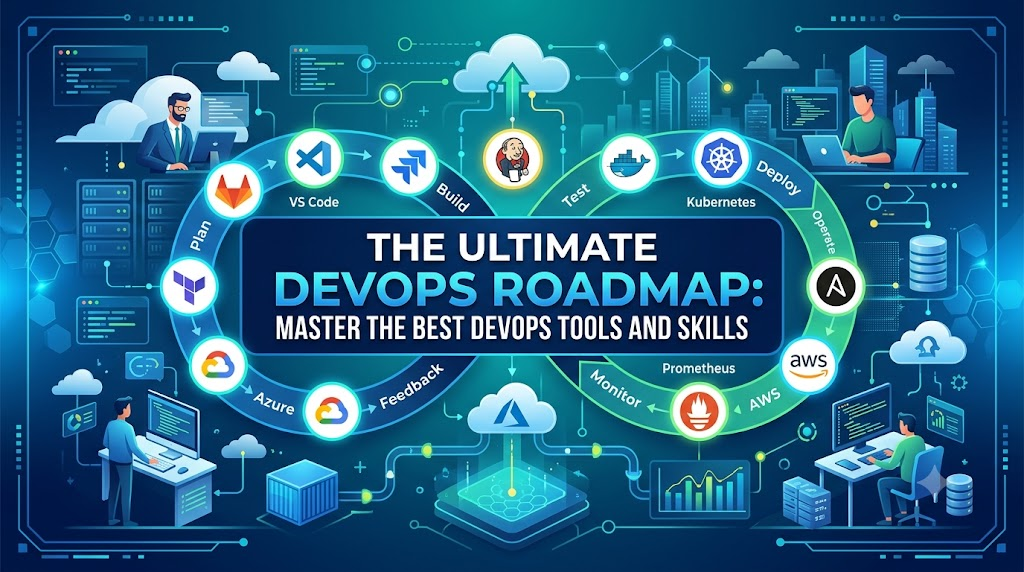
The modern software landscape moves fast. To keep up, companies no longer separate development and operations teams. Instead, they bridge the gap using automated workflows, continuous integration, and cloud infrastructure. If you are trying to break into this high-paying field, navigating the vast ecosystem of technologies can feel overwhelming. Following a structured DevOps Roadmap is the most effective way to cut through the noise, build high-demand skills, and land a rewarding role.
Whether you are a software developer looking to understand operations, a system administrator transitioning to the cloud, or a complete tech novice, this guide breaks down exactly what you need to learn. By focusing on practical engineering principles rather than just memorizing software syntax, you can build a sustainable, long-term career in cloud computing and platform engineering.
Why Adopting DevOps Matters in Modern Tech
In the past, developers wrote code and handed it over to an operations team for deployment. This siloed approach led to frequent miscommunications, slow release cycles, and broken production environments.
DevOps changes this dynamic entirely by introducing a culture of shared responsibility, automation, and feedback.
+-----------------+      Continuous Feedback      +--------------------+
|   Development   | <--------------------------- |     Operations     |
| (Code & Build)  | ---------------------------> | (Deploy & Monitor) |
+-----------------+     Automated Pipelines      +--------------------+
By breaking down traditional barriers, organizations achieve:
- Faster Time-to-Market: High-performing teams deploy changes to production multiple times a day instead of once a quarter.
- Improved Collaboration: Developers understand infrastructure, and operations teams treat infrastructure as code.
- Higher Reliability: Automated testing catches bugs early, lowering the failure rate of new releases.
Industry Overview: The Rise of Platform Engineering and SRE
The DevOps philosophy has evolved significantly over the last decade. While the core goals remain the same—speed, reliability, and security—the roles within the industry have specialized.
Today, you will frequently encounter titles like Site Reliability Engineer (SRE) and Platform Engineer. SREs focus heavily on system availability, latency, efficiency, and capacity management, often using software engineering practices to solve operations problems. On the other hand, Platform Engineering teams build internal developer platforms (IDPs) to provide self-service capabilities, allowing software developers to deploy code without needing a deep knowledge of underlying cloud architectures.
Integrating security directly into this lifecycle has also given rise to DevSecOps, ensuring that vulnerability scanning and compliance checks happen automatically within the delivery pipeline.
Step-by-Step DevOps Roadmap for Beginners
If you are looking for a comprehensive DevOps Tutorial for Beginners, following a step-by-step progression prevents burnout. You cannot learn everything at once; instead, master one layer of the stack before moving to the next.
+--------------------------------------------------------+
| Level 4: CI/CD Pipelines & Orchestration (Kubernetes) |
+--------------------------------------------------------+
                           ^
                           |
+--------------------------------------------------------+
| Level 3: Infrastructure as Code & Containers (Docker)  |
+--------------------------------------------------------+
                           ^
                           |
+--------------------------------------------------------+
| Level 2: Networking, Security, & Cloud Providers       |
+--------------------------------------------------------+
                           ^
                           |
+--------------------------------------------------------+
| Level 1: Foundations (Linux, Git, & Scripting)         |
+--------------------------------------------------------+
Level 1: Core Foundations
Before touching complex cloud platforms, you must master the fundamental building blocks of computing:
- Linux & Scripting: The vast majority of production servers run on Linux. Learn to navigate the command line, manage permissions, and write Bash or Python scripts to automate boring tasks.
- Git & Version Control: Version control is non-negotiable. Master branching, merging, and pull requests using Git. This is the foundation for GitOps and modern collaboration.
Level 2: Cloud Computing & Networking
Production applications live in the cloud. You don’t need to learn every platform, but you should become proficient in at least one major provider:
- AWS (Amazon Web Services), Microsoft Azure, or GCP (Google Cloud Platform).
- Understand core networking concepts like VPCs, subnets, DNS, load balancers, and firewalls.
Level 3: Containers and Infrastructure as Code (IaC)
Once you understand the cloud, you need to learn how to package software and provision servers automatically:
- Containers: Learn Docker to package applications with all their dependencies, ensuring they run identically on your laptop and in production.
- Infrastructure as Code: Move away from clicking buttons in web consoles. Use tools like Terraform or Ansible to define your entire infrastructure using configuration files.
Level 4: Continuous Integration & Continuous Delivery (CI/CD)
The heart of DevOps is the automated pipeline. You must learn how to automate the journey from a developer’s laptop to the live production server:
- Build and configure automated pipelines using tools like Jenkins, GitHub Actions, or GitLab CI.
- Orchestrate large-scale container deployments across multiple servers using Kubernetes.
For a deep dive into each of these phases, checking out specialized guides on platforms like BestDevOps.com can help you track your progress and find curated tutorials for every level.
Core DevOps Concepts You Must Understand
To succeed in this field, you need to understand the architectural philosophies that govern modern infrastructure:
Continuous Integration / Continuous Delivery (CI/CD)
CI/CD ensures that code changes are automatically tested, built, and prepared for release. Continuous Delivery takes this a step further by ensuring the code is always in a deployable state, while Continuous Deployment automatically pushes those changes directly to production servers without human intervention.
Infrastructure as Code (IaC)
IaC treats your infrastructure setup the same way developers treat application code. Your networks, virtual machines, and databases are defined in text files, version-controlled in Git, and deployed via automated pipelines. This eliminates “configuration drift,” where server settings change over time due to manual tweaks.
Microservices vs. Monoliths
Traditional applications are “monoliths,” meaning the entire software system runs as a single unit. Modern systems favor microservices, breaking the application into smaller, independent services that communicate over APIs. Microservices scale beautifully but require robust container orchestration to manage.
The Core Benefits of Modern DevOps Practices
Implementing these strategies yields massive business and technical advantages:
- Drastically Reduced Deployment Risk: Shipping small, incremental updates frequently makes it much easier to identify and fix bugs compared to deploying massive, high-risk software updates every few months.
- Optimized Resource Utilization: Using container technologies allows you to pack multiple applications onto fewer cloud servers, significantly lowering monthly cloud infrastructure bills.
- Rapid Feedback Loops: Automated monitoring and observability tools alert engineering teams to production performance regressions within seconds, rather than waiting for customer complaints.
Common Challenges and How to Overcome Them
Transitioning to this way of working is rarely seamless. Here are the most frequent roadblocks engineering teams encounter:
| Challenge | Impact on the Team | How to Overcome It |
| Cultural Resistance | Teams stick to old siloed habits; developers refuse to support live code. | Foster shared ownership. Include developers in on-call rotations and reward system stability. |
| Tool Fatigue | Engineers try to adopt too many complex tools simultaneously. | Focus on solving a specific problem first (e.g., automated testing) before adopting advanced platforms. |
| Security Bottlenecks | Security teams block fast deployments due to manual reviews. | Shift security left by integrating automated vulnerability and dependency scanners directly into CI/CD. |
Architectural Best Practices
When building production environments, always design with these rules in mind:
- Embrace Immutability: Never log into a production server to modify settings or apply a patch. If a server needs an update, destroy it and provision a fresh, pre-configured instance using your IaC files.
- Monitor Everything: Implement comprehensive observability using metrics, logs, and traces. You cannot fix what you do not measure.
- Automate Security Injections: Ensure secrets, API keys, and certificates are managed securely via tools like HashiCorp Vault, rather than hardcoding them into source repositories.
Practical Examples: A Basic GitHub Actions CI/CD Pipeline
To give you an idea of how automation works, here is a practical example of a GitHub Actions workflow configuration file (.github/workflows/deploy.yml). This simple script automatically tests and builds a Node.js application every time a developer pushes code to the main branch:
YAML
name: Node.js CI/CD Pipeline

on:
  push:
    branches: [ main ]

jobs:
  build-and-test:
    runs-on: ubuntu-latest

    steps:
    - name: Checkout Code
      uses: actions/checkout@v3

    - name: Setup Node.js
      uses: actions/setup-node@v3
      with:
        node-node-version: '18'

    - name: Install Dependencies
      run: npm install

    - name: Run Unit Tests
      run: npm test

    - name: Build Application Docker Image
      run: |
        docker build -t my-app:${{ github.sha }} .
        echo "Application built successfully!"
Real-World Use Case: Moving from Manual Deployments to Automated Clouds
Consider a growing e-commerce company that used to experience major website crashes every holiday shopping season. Their developers manually compiled code, zipped the files, and uploaded them to web servers via SFTP. If a server ran out of memory, engineers had to manually log in via SSH to restart services.
By adopting an automated approach, they transformed their operations:
- They codified their infrastructure using Terraform, making it easy to spin up identical testing environments.
- They containerized their retail application using Docker, ensuring it behaved exactly the same way across development and production environments.
- They configured Kubernetes autoscaling, allowing their application cluster to automatically provision more servers when traffic spiked during a sale, and shrink back down afterward to save money.
Recommended Tools Ecosystem
Navigating the landscape requires knowing which tools own the market. Below is a curated breakdown of the Best DevOps Tools grouped by their function:
1. Code & Collaboration
- Git & GitHub / GitLab: The gold standard for source control management and collaboration.
2. CI/CD Automation
- Jenkins: The traditional, highly customizable open-source automation server.
- GitHub Actions / GitLab CI: Modern, cloud-native YAML-defined workflow engines integrated directly into code repositories.
3. Containerization & Orchestration
- Docker: The industry standard for creating and running lightweight application containers.
- Kubernetes (K8s): The premier platform for automating deployment, scaling, and management of containerized services.
4. Infrastructure as Code (IaC)
- Terraform: An incredible tool for provisioning cloud infrastructure across AWS, Azure, and Google Cloud using declarative configuration files.
- Ansible: Perfect for configuration management, server provisioning, and application deployment.
5. Monitoring & Observability
- Prometheus & Grafana: The classic open-source pairing for gathering metrics and building stunning operational dashboards.
- ELK Stack (Elasticsearch, Logstash, Kibana): Used for collecting, parsing, and visualizing log data from your applications.
6. Engineering Performance Measurement
- LinearB / Sleuth: Specialized DORA Metrics Tools used by engineering leaders to track operational performance, measuring key data points like deployment frequency and change failure rates.
If you want a detailed side-by-side comparison of these technologies to choose the right fit for your stack, exploring the dedicated tool guides on BestDevOps.com can clarify your options.
Career Opportunities & Growth Paths
The tech industry is facing a massive shortage of qualified professionals who understand both code and systems engineering. Pursuing this career path opens doors to several rewarding roles:
- DevOps Engineer: Focuses on optimizing delivery pipelines, building automation, and maintaining infrastructure.
- Cloud Architect: Designs the overarching cloud strategy, network topology, and system integrations for large enterprises.
- Site Reliability Engineer (SRE): Ensures production systems run reliably, managing incident response and automating recovery workflows.
DevOps Engineer Salary Trends
Because these positions require a mix of software development and operations experience, compensation remains incredibly high.
According to major global tech recruitment indexes:
- Entry-Level Positions: Usually command between $85,000 and $115,000 annually.
- Mid-Level Engineers: Average around $125,000 to $155,000 per year.
- Senior Engineers / Architects: Regularly earn well over $175,000 to $220,000+, depending on geographic region and cloud specialization.
To keep tabs on fluctuating tech markets and geographical pay variations, tracking the annual updates on the DevOps Engineer Salary index at BestDevOps.com will keep you ahead of the curve during your next negotiation.
Up-Skilling: Courses & Professional Certifications
Landing an interview requires proving your knowledge. Combining structured courses with structured industry credentials is the fastest way to get noticed by recruiters.
Finding the Best DevOps Course
When looking for a learning path, avoid courses that only show you how to type commands without explaining the architecture behind them. Look for training programs that emphasize building complete, real-world portfolios. If you are stuck searching through options, exploring the reviewed options for the Best DevOps Course on BestDevOps.com can point you toward highly-rated, hands-on tutorials.
Best DevOps Certifications to Boost Your Resume
Certifications validate your skills and help your resume pass automated screening systems. Focus on these highly-regarded industry credentials:
- AWS Certified DevOps Engineer – Professional: Shows you can build and secure automated environments on Amazon Web Services.
- Certified Kubernetes Administrator (CKA): A practical, hands-on exam that proves you can build, manage, and troubleshoot live Kubernetes clusters.
- HashiCorp Certified: Terraform Associate: Confirms your knowledge of infrastructure-as-code concepts and multi-cloud provisioning workflows.
Capitalizing on Practical Experience: Build Real DevOps Projects
Reading documentation is a start, but you won’t truly learn until you break something in production. Building hands-on DevOps Projects is critical for developing real-world DevOps Engineer Skills.
Here are three excellent projects to build for your resume portfolio:
- The Static Website Infrastructure: Deploy a simple static website to an AWS S3 bucket or Azure Blob storage. Write a Terraform script to provision the bucket, configure a content delivery network (CDN) like CloudFront, and set up a custom domain name using DNS.
- The Containerized Multi-Container Application: Take an open-source web application that uses a backend database (like Node.js and MongoDB). Package both services into individual Docker containers, configure a secure internal network for them to communicate, and deploy them locally using Docker Compose.
- The Complete GitOps CI/CD Pipeline: Write a application, set up a GitHub repository, and create a GitHub Actions pipeline that triggers every time you push code. The pipeline should run test suites, build a container image, push that image to a public container registry, and deploy it to a live cloud server.
If you need complete guides, sample code templates, or troubleshooting tips for these labs, you can find a wealth of ideas by browsing the guided walkthroughs on BestDevOps.com.
Frequently Asked Questions
1. What is the difference between DevOps and traditional System Administration?
Traditional SysAdmins manually configure, patch, and maintain physical or virtual servers. DevOps focuses on automation, treating everything from infrastructure configuration to software deployments as software code, allowing systems to scale infinitely without manual human intervention.
2. Do I need to be an expert coder to succeed in this career?
No, you do not need to build complex software features like a full-stack developer. However, you must be comfortable writing scripts (such as Python or Bash) to automate system tasks, and you need to understand how application code interacts with networks, databases, and operating systems.
3. Which cloud provider should a beginner learn first?
AWS (Amazon Web Services) currently holds the largest market share globally, making it a fantastic starting point with the most job openings. However, Microsoft Azure is exceptionally dominant in enterprise corporate environments, and Google Cloud Platform (GCP) is incredibly popular among modern tech startups.
4. Why is Kubernetes considered difficult to learn?
Kubernetes handles complex, large-scale systems, meaning it introduces a lot of advanced networking, storage, and cluster management concepts at once. Beginners should always master basic Linux administration and single-container setups with Docker before attempting to dive into Kubernetes orchestration.
5. What are DORA metrics?
DORA (DevOps Research and Assessment) metrics are four key performance measures used to evaluate an engineering team’s delivery efficiency. They track deployment frequency, lead time for changes, mean time to recovery (MTTR), and change failure rate.
6. Can I break into this industry without a computer science degree?
Absolutely. Companies value demonstrable technical skills, portfolio projects, and hands-on system knowledge far more than a formal university degree. Having a strong GitHub portfolio with working code examples is the best way to prove your technical competence.
7. How long does it take to become a proficient Cloud Engineer?
If you are starting from scratch, it typically takes 6 to 12 months of consistent daily study and hands-on practice to build a solid baseline understanding of networking, Linux script writing, cloud infrastructure, and deployment automation pipelines.
8. What is GitOps?
GitOps is an operational framework that takes DevOps best practices—like version control, collaboration, compliance, and CI/CD—and applies them directly to infrastructure automation. In GitOps, a Git repository acts as the single source of truth for your live infrastructure state.
Key Takeaways
- Automation is Key: If you have to perform an infrastructure task manually more than twice, write a script or an IaC file to automate it.
- Foundations First: Never skip the basics. A deep understanding of Linux, networking, and Git will save you hundreds of hours of debugging later.
- Focus on Containers and IaC: Mastering Docker and Terraform is the single best way to make yourself immediately hirable in the modern cloud economy.
- Always Be Practicing: Theory is useless without application. Build portfolio projects, configure automated pipelines, and deliberately break your systems to learn how to fix them.
Conclusion & Next Steps
Breaking into the world of cloud infrastructure is a highly rewarding journey, but it requires dedication, continuous learning, and a structured roadmap. By mastering foundational tech like Linux and Git, understanding cloud infrastructure, and implementing continuous delivery automation, you position yourself as an invaluable asset to any modern engineering team.
If you are ready to kickstart your journey or want to polish your current skills, check out BestDevOps.com for access to curated learning maps, tool deep-dives, real-world portfolio project ideas, and comprehensive study materials designed to help you succeed. Take the next step, start building an automated pipeline today, and unlock a world of high-paying career opportunities!
